How Do Commercial Growers Stop Squash Vine Borers?
What Home Gardeners Can Learn From the Pros
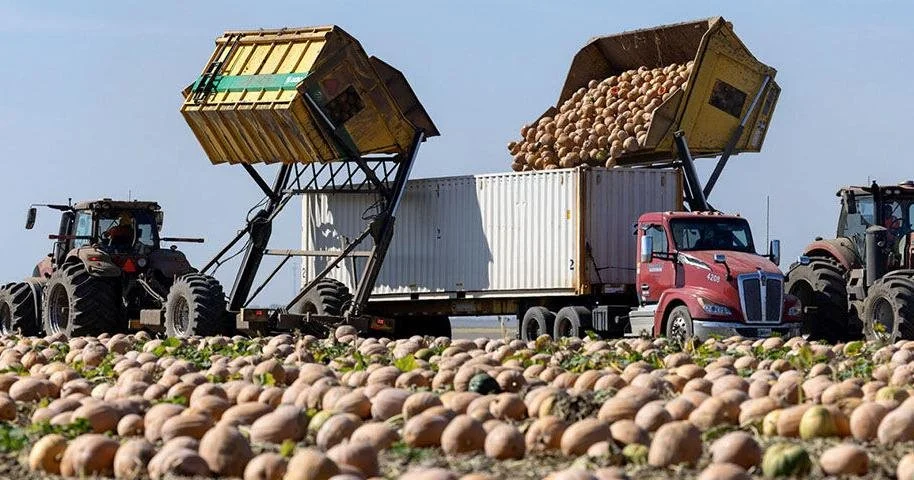
If you've ever watched a beautiful zucchini, pumpkin, or winter squash plant suddenly wilt and collapse from squash vine borers, you may have wondered: How in the world do commercial growers grow acres of squash without squash vine borers destroying everything?
I wondered the same thing. After losing plants to squash vine borers and even performing "surgery" to remove the larvae from inside my vines, I wanted to know what farmers do differently.
As it turns out, the biggest difference isn't necessarily some secret pesticide. It's timing.
Commercial growers monitor for squash vine borers and try to stop the larvae before they ever get inside the plant. Here's what I learned.
What is a squash vine borer?
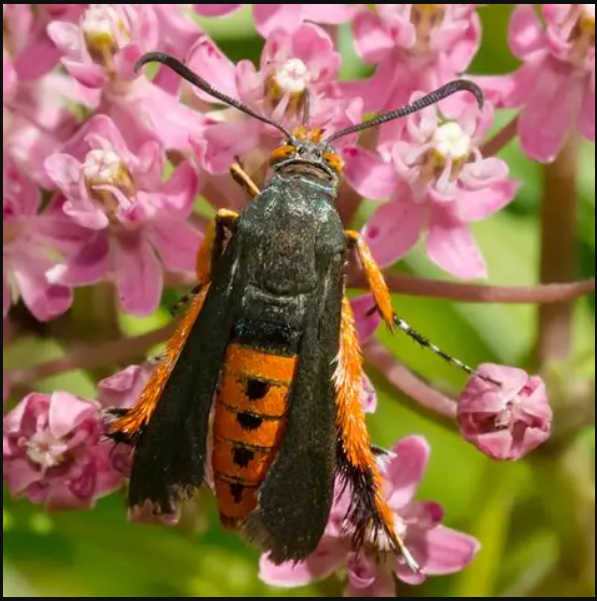
The squash vine borer (Melittia cucurbitae) is a clearwing moth. The adult is a striking orange-and-black day-flying moth that can look a little like a wasp. See photo below.
The moth itself doesn't eat your squash plant. The problem begins when the female lays eggs on or near the stems of susceptible squash plants. The eggs hatch and the tiny larvae bore into the stem.
Once inside, they feed on the tissue in the vine and interfere with the plant's ability to move water. Eventually you may notice wilting, yellowing, holes in the stem, and the telltale sawdust-like material called frass.
Michigan State University reports that squash vine borers can have one to two generations per year in Michigan, and large-stemmed cucurbits including pumpkins, zucchini, acorn squash and Hubbard squash are vulnerable.
How do commercial growers know when squash vine borers are coming?
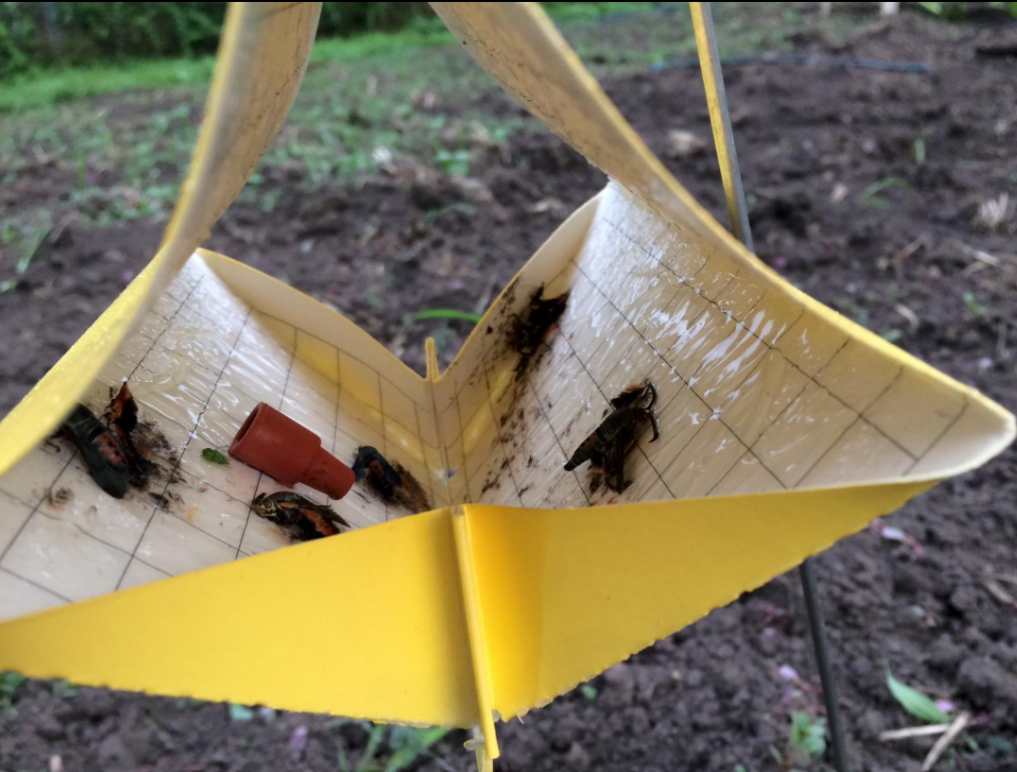
They don't necessarily wait for their plants to wilt. Growers can use pheromone traps to monitor adult squash vine borer moths. Monitoring tells growers when adult moth activity has begun and therefore when egg laying and hatching are likely to follow.
The critical point is that the larva is much easier to control before it disappears inside the vine.
So what's the commercial grower's secret?
Prevent the caterpillar from getting inside the vine in the first place.
University of Minnesota Extension explains that when insecticides are used, the goal is to have the product in place when larvae are hatching but before they burrow into the stem. Once plants are wilting, insecticides generally will not reach larvae already protected inside the stem.
That's one reason commercial growers aren't walking through acres of pumpkins performing squash vine borer surgery. Their management program is designed to interrupt the pest before surgery would be necessary.
What do growers spray for squash vine borers?
Commercial pesticide choices depend on the crop, location, current registration and product label. For home gardens, northern Extension recommendations list active ingredients including carbaryl, permethrin, bifenthrin and esfenvalerate; Iowa State also lists spinosad among labeled garden options.
The important lesson isn't simply which product is used. Treatment must reach the vulnerable stage before the newly hatched larva enters the stem.
Always verify that squash, pumpkin or the specific cucurbit being treated is listed on the current pesticide label, follow pollinator precautions, and observe the pre-harvest interval. The label is the law.
Where is the spray applied?
The target is not simply the leaves. University of Minnesota Extension recommends directing pesticide applications toward the stems at their base, where eggs are laid and larvae enter.
This helps explain why spraying the foliage of an already-wilting plant is unlikely to solve the problem.
How often are treatments applied?
Timing and intervals depend on the current product label and local pest activity. University of Minnesota's home-garden guidance recommends beginning when vines start to run or when adults are first detected, repeating in 7 to 10 days, and, when more thorough protection is needed, continuing at label-directed intervals through the period of adult activity.
The lesson for a home gardener is not to copy a commercial spray program blindly. It is to understand that prevention has to occur during the short period when eggs are hatching and larvae are still exposed.
Why doesn't spraying work after my squash starts wilting?
Because your enemy is hiding.
Once the larva has tunneled into the vine, plant tissue protects it from most foliar sprays. You can identify the problem correctly, spray the plant, and still watch it decline because you missed the biological window when the insect was exposed.
University of Minnesota also notes that foliar Bt is not effective against squash vine borer once the larvae are inside the stems.
What can organic growers do?
Organic and low-input growers face the same biological challenge: prevent larvae from becoming established inside the stem.
Useful tools can include monitoring, row covers or other exclusion, crop rotation, less-susceptible varieties, sanitation, altered planting dates, removal of infested plants, and appropriately labeled biological or organic products.
Row covers must be managed around flowering because excluding the moth also excludes pollinators.
Do commercial growers use trap crops?
Yes. Iowa State University Extension describes commercial growers using Blue Hubbard squash as a trap crop because it is highly attractive to squash vine borers.
Blue Hubbard can be planted nearby so that much of the egg laying is concentrated on the trap crop. The infested trap plants can then be destroyed or treated, reducing pressure on the desired zucchini or pumpkin crop.
This strategy requires space and careful management, so it may be less practical in a small home garden.
Do growers rotate squash crops?
Yes, although rotation is only one layer of protection.
Squash vine borer larvae leave the vines and pupate in the soil. Rotating cucurbits away from previously infested areas and destroying crop residue can reduce the number of borers emerging immediately beside next year's plants.
Adult moths can fly, however, so rotation does not guarantee that a new planting will remain borer-free.
Are some squash naturally less susceptible?
Yes, and this may be one of the easiest changes a gardener can make.
University of Minnesota Extension notes that Butternut, Zucchino Rampicante, and Tatume Squash are less susceptible than Hubbard and acorn squash, and cucurbits in the Cucurbita moschata species are relatively tolerant. Summer squash is especially susceptible so look for Desi Squash, Eight Ball Squash , Poquito Squash and Cuccuza instead. Buy your seeds now for spring!
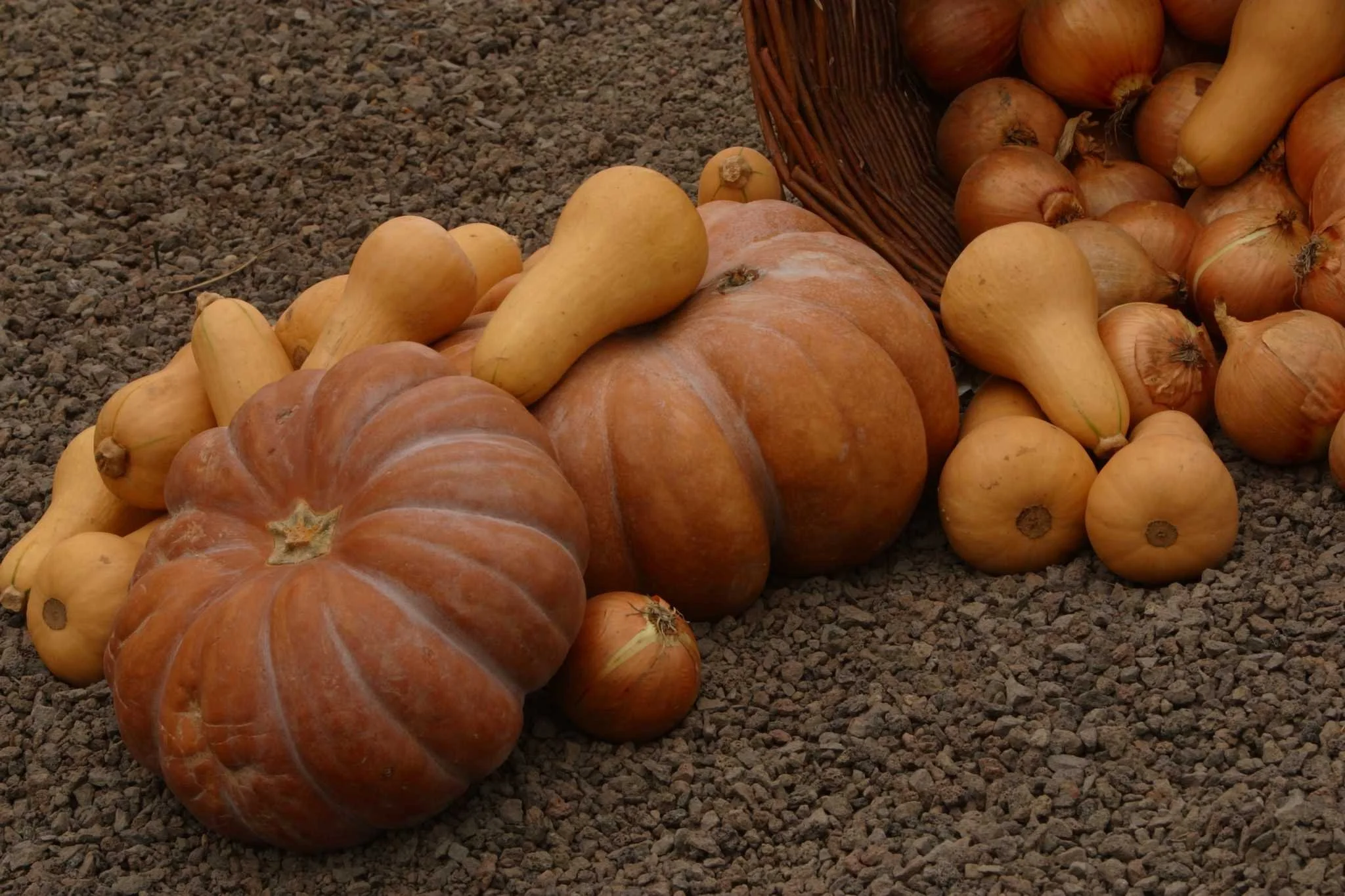
If squash vine borers destroy your plants every year, changing what you grow may be considerably easier than fighting the insect all summer.
Can I simply plant zucchini later?
In northern climates, this can be a very useful strategy.
University of Minnesota Extension recommends a second planting of summer squash in early July so that the later crop develops after the main period of adult borer activity and egg laying.
Instead of fighting squash vine borers all summer, changing the planting schedule may allow a northern gardener to avoid part of the battle.
What if I already have squash vine borers inside the vine?
That's when we get into squash vine borer surgery.
At the first signs of frass or wilting, carefully slit the affected stem lengthwise, locate and remove or kill the larva, then mound moist soil over the injured section and keep it watered. New roots may develop along the covered stem and help the plant survive.
It doesn't always work, but when the larva is already inside and the plant is worth saving, it's an option.
What should I do with a plant that's too damaged to save?
Get it out of the garden.
The larva eventually exits the vine, enters the soil and pupates. Promptly removing and destroying heavily infested plants can prevent larvae still inside those vines from completing the cycle in your garden.
At the end of the season, remove infested plant material rather than leaving it in place.
So what can home gardeners learn from commercial growers?
The biggest lesson I learned wasn't "spray more." It was: stop fighting the squash vine borer after it's already inside the plant. Read about what I’m plannning for next year here: Squash Vine Borers Beat Me This Year: Everything I've Learned (and What I'll Do Differently Next Season)
Commercial growers put much more emphasis on knowing when the moth arrives, when eggs are being laid and when larvae are hatching.
For my own northern garden, that means thinking about squash vine borer management as a season-long strategy: Monitor - Prevent - Scout - Intervene Early - Clean Up.
And if the borers still get through? Well, I already know how to perform squash surgery.
Gardening isn't about never having problems. It's about learning enough from this year's problems to make next year's garden a little easier.
Research & Further Reading
Michigan State University Extension - Squash Vine Borer as a Pest of Cucurbits in Michigan
University of Minnesota Extension - Squash Vine Borers
University of Minnesota Extension - Common Insects in Vegetable Crops
Ohio State University Extension - Squash Vine Borer Management Is Critical
Ohio State University - Squash Vine Borer, Vegetable & Fruit Insect Pest Management