Will Wildfire Smoke Hurt Your Garden? What Gardeners Should Know
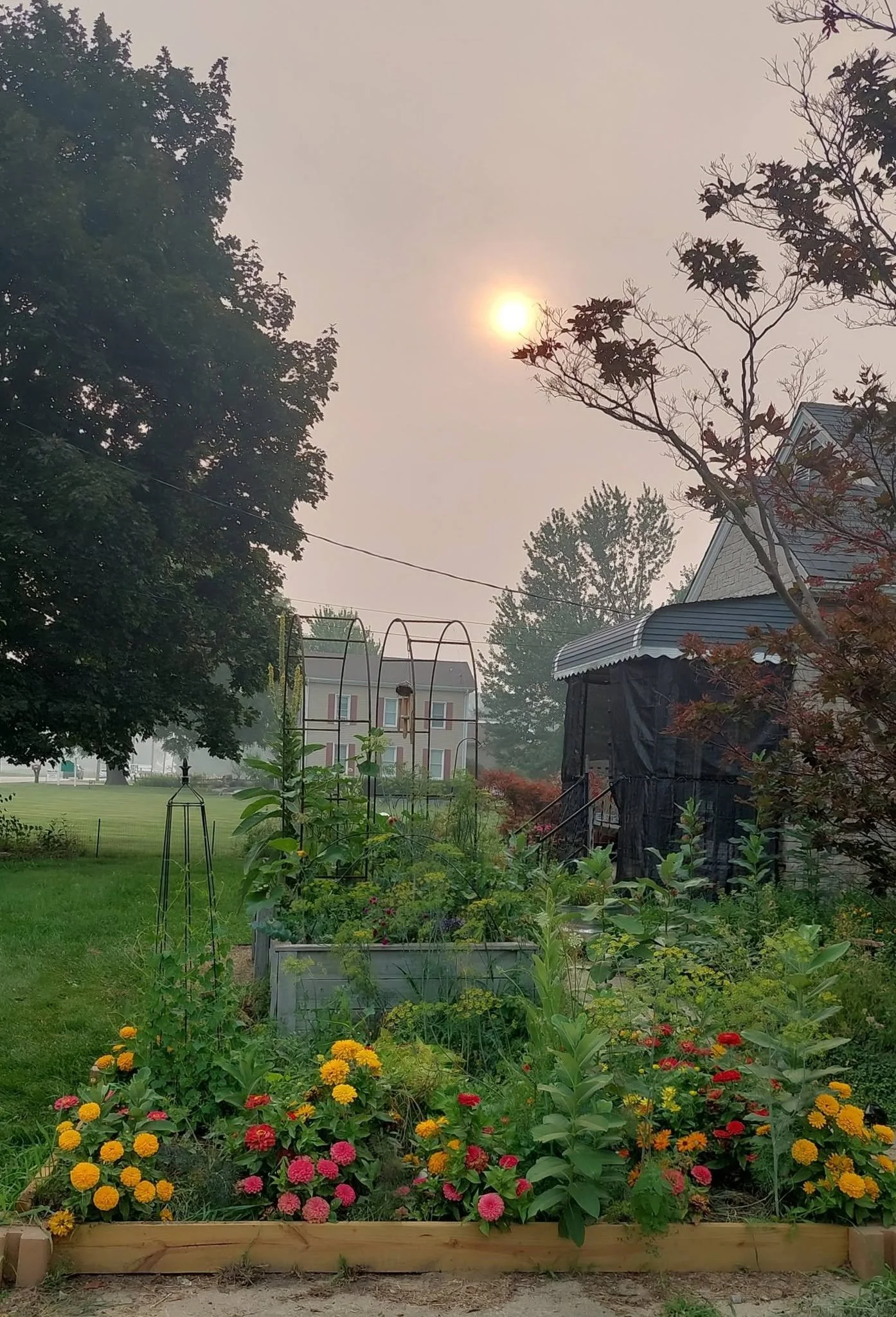
The other morning, I walked outside and the sky looked strange.
The sun was hazy. The air had that smoky appearance we've unfortunately become more familiar with here in Michigan, even though the fires producing the smoke may be hundreds—or even thousands—of miles away.
And, being a gardener, one of my first thoughts was:
What is all this wildfire smoke doing to my garden?
If you've wondered the same thing, there's some good news.
Wildfire Smoke Doesn't Automatically Mean Your Plants Are in Trouble
When we see that thick haze in the sky, it's easy to assume that if the smoke isn't good for us, it must be terrible for our plants too.
But plants and people aren't affected by wildfire smoke in exactly the same way.
Plants need sunlight for photosynthesis, so extremely dense or prolonged smoke can reduce the amount of usable light reaching their leaves.
But there's an interesting flip side.
Smoke can also scatter sunlight, allowing light to reach leaves deeper inside a plant canopy. And smoky conditions sometimes reduce temperatures and slow water loss from plants.
So a temporary period of smoky skies doesn't necessarily mean your tomatoes, peppers, flowers or other garden plants are being damaged.
What About the Ash and Particles on the Leaves?
This is something I pay more attention to.
Wildfire smoke contains tiny particles that can eventually settle onto plant leaves.
A light amount isn't usually a reason to panic.
If you notice a visible coating of ash or debris on your plants, however, you can gently rinse the foliage with clean water after the smoky conditions have passed.
There's no need to start scrubbing leaves or treating your garden with something special.
Sometimes a gentle rinse—or a good rain—is all that's needed.
Should I Wash Vegetables Exposed to Wildfire Smoke?
This is probably the question vegetable gardeners care about most.
If you're harvesting vegetables or fruit during smoky conditions, wash your produce before eating it, just as you normally should with garden produce.
If ash or particulate matter has visibly settled on something you're going to eat, give it a thorough rinse with clean water.
Leafy vegetables deserve a little extra attention because their large, textured surfaces can collect more debris than something smooth like a tomato.
And, of course, discard anything that has been directly contaminated by fire debris, chemicals or other questionable material rather than simply exposed to distant wildfire smoke.
Your Garden May Actually Appreciate the Break From Extreme Heat
There's another part of this that's easy to overlook.
We've had stretches of hot summer weather, and intense sun combined with high temperatures can put plenty of stress on a garden.
A smoky haze can reduce some incoming solar radiation and sometimes lower daytime temperatures.
That doesn't make wildfire smoke good for the garden.
But it does mean we shouldn't assume every hazy day is damaging our plants.
Gardens experience changing conditions constantly—clouds, storms, heat, humidity, cool spells and, increasingly for many of us, smoke.
Plants are remarkably adaptable.
Don't Overreact With Water
One mistake I'd avoid is seeing droopy plants under a strange smoky sky and automatically reaching for the hose.
Check the soil first.
Stick your finger into the soil or check underneath your mulch.
If there's adequate moisture, don't water simply because the plants look different or the weather looks alarming.
Cloud cover, smoke, humidity and lower temperatures can all change how quickly your garden loses moisture.
This is another reason I'm such a fan of mulch—it helps moderate soil temperature and moisture regardless of what's happening above ground.
The Bigger Concern Is the Gardener
There's one part of smoky weather I don't want gardeners to overlook:
You.
Plants can stay outside.
You don't necessarily need to.
If air-quality alerts are telling people in your area to limit outdoor activity, that's probably not the afternoon to decide you're going to weed the entire vegetable garden.
The tomatoes will survive without you for a few hours.
Check your local air-quality information, especially if the smoke is heavy, and save strenuous garden work for better conditions.
Sometimes lazy gardening really does mean leave the garden alone and go back inside. 😂
What Should You Do for Your Garden During Wildfire Smoke?
For most home gardeners experiencing distant wildfire smoke rather than a nearby fire, my approach is pretty simple:
Don't panic or start treating otherwise healthy plants.
Continue checking soil moisture and water according to what the plants actually need.
Rinse visible ash or particulate matter from plants when appropriate.
Thoroughly wash harvested fruits, vegetables and herbs before eating them.
Pay attention to local air-quality warnings and protect yourself first.
Then let the garden do what gardens are remarkably good at doing:
Adapt.
Observe Before You React
Wildfire smoke is another good example of something I've learned after many years of gardening.
When something unusual happens, we have a tendency to immediately ask:
“What do I need to DO?”
Sometimes the answer is very little.
Observe your plants.
Check your soil.
Watch the weather.
Wash your harvest.
And give the garden a chance to respond before assuming there's a problem you need to fix.
That's a pretty good rule for gardening in general.
Learn. Grow.
Is wildfire smoke affecting your garden this summer?
Have you noticed hazy skies, ash on your plants or changes in how your garden is growing?
I'd love to hear what you're seeing where you live.
And if unusual weather has you wondering what's happening in your garden - or what you should do about it - Garden Consultation - and we can figure it out together.