Squash Vine Borers Beat Me This Year: Everything I've Learned (and What I'll Do Differently Next Season)
If you grow zucchini, pumpkins, summer squash, gourds, or certain winter squash, chances are you've heard of the dreaded squash vine borer.
This year...
The squash vine borers won.
As much as I hate admitting defeat, every gardener loses a battle now and then. The important thing is learning from it so next year you're better prepared.
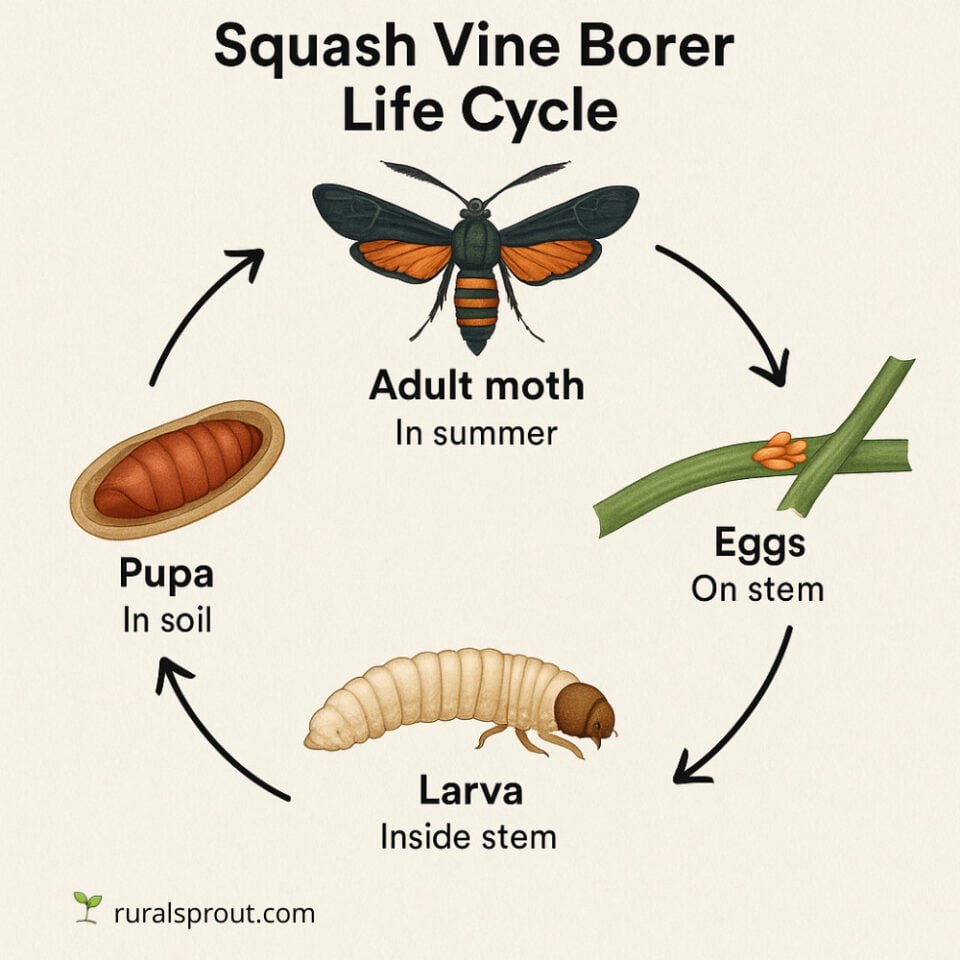
Because I don't want those little grubs dropping into the soil, spinning cocoons, and emerging as moths to lay another generation of eggs, I'll be removing every infested vine and burning them in my fire pit rather than letting them remain in the garden. Promptly destroying infested vines helps interrupt their life cycle before the larvae can pupate in the soil. If I couldn’t burn them, I would seal them in a bag and throw them away.
The good news?
There are a surprising number of ways to reduce squash vine borer damage, especially when you combine several methods instead of relying on just one.
What Is a Squash Vine Borer?
Despite the name, the adult isn't a beetle or a wasp.
It's actually a beautiful day-flying clearwing moth with orange and black markings that often fools people into thinking it's a wasp.
The female lays tiny reddish-brown eggs near the base of squash plants. When the eggs hatch, the larvae tunnel inside the hollow stem where they feed unseen. By the time your plant suddenly wilts, the damage has often already been done.
Here’s a dissection video so you can see them inside a stem. And below is the life cycle.
Signs You Have Squash Vine Borers
Watch for:
A healthy-looking plant that suddenly wilts.
Sawdust-like orange or yellow frass near the base of the stem.
Small holes in the vine.
Hollow stems.
Sections of the vine collapsing despite moist soil.
The earlier you catch them, the better your chances of saving the plant.
My Favorite Strategy: Prevention
As a lazy gardener, I always prefer preventing problems instead of fixing them.
Here are the methods that gardeners have had success with.
1. Cover Plants Early
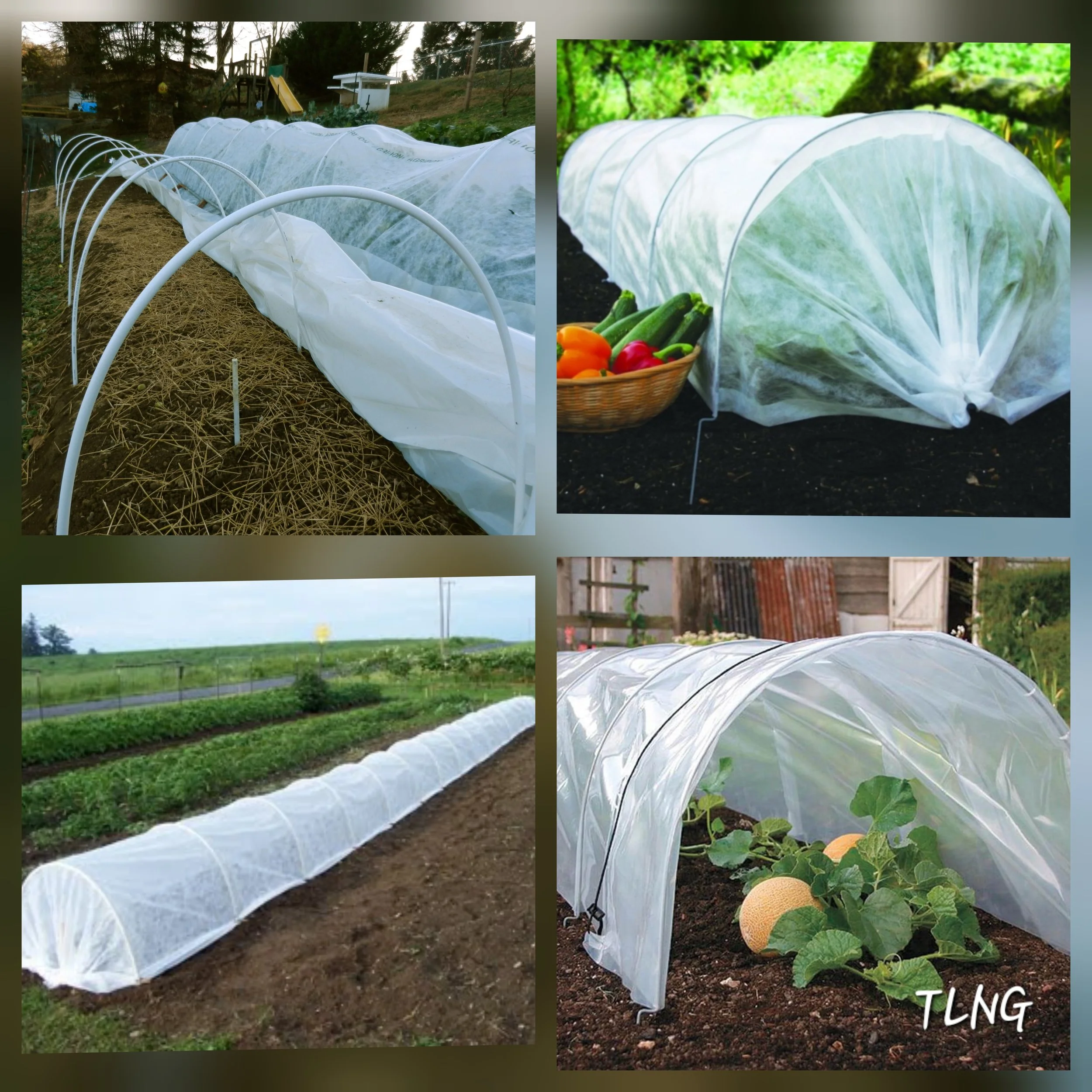
Floating row hoops and covers or insect netting prevent moths from laying eggs - see image below.
Remember to remove the covers once flowers appear—or hand-pollinate while they're covered.
2. Inspect Plants Frequently
Adult moth activity generally begins in late June and continues through July, so inspections should start before then.
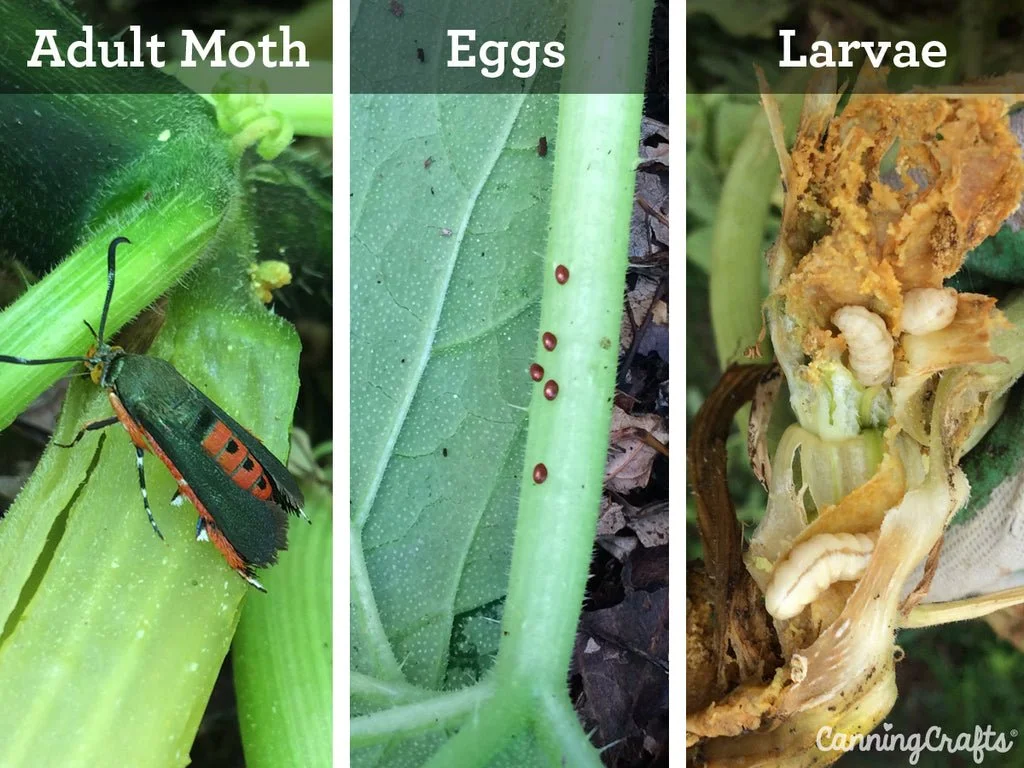
Every few days, check the lower stems for eggs.
They're much easier to remove before they hatch than after the larvae disappear into the stem.
Here’s a zucchini pruning video that includes a stem inspection.
Here’s that dissection video again so you can see the borers inside a stem - in case you missed it.
Below is what you’re looking for on your plants
3. Wrap the Base of the Stem
Some gardeners wrap the first few inches of stem with:
Aluminum foil
Nylon stockings
Fabric plant tape
This creates a physical barrier that discourages egg laying.
4. Encourage Extra Roots
As vines grow, bury sections of the stem with soil.
If the main stem is attacked, those additional roots can keep part of the plant alive.
5. Grow More Resistant Varieties
Not all squash are equally attractive.
Less susceptible options include:
Butternut squash
Tromboncino squash
Highly susceptible plants include:
Zucchini
Yellow summer squash
Hubbard squash
Many pumpkins
6. Rotate Crops
Don't plant squash in the same location every year.
Since the larvae overwinter in the soil, moving your crop makes it harder for newly emerged moths to find your plants.
7. Time Your Planting
Depending on where you live, planting earlier—or in some areas waiting until after the main moth flight—can reduce damage. Check with your local Extension office for the best timing in your region.
8. Use Pheromone Traps
Pheromone traps don't eliminate the problem, but they let you know when adult moths are flying so you can step up scouting or protective measures.
Minnesota Extension describes a simple yellow pan filled with water and a drop of dish soap as a monitoring tool for adult moths - an inexpensive trick.
What If They're Already Inside?
Don't give up immediately.
Gardeners often save plants by:
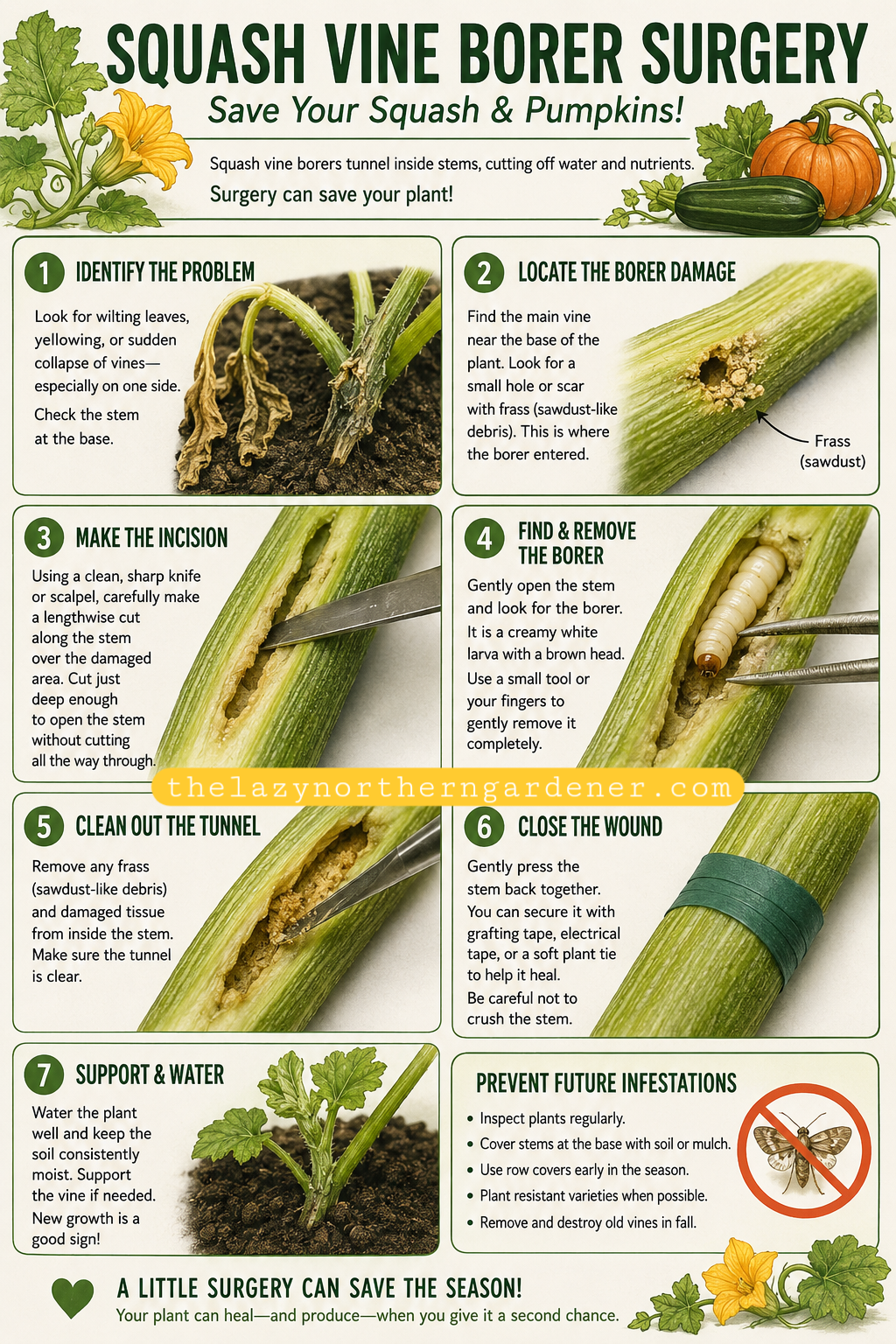
Carefully slicing the stem lengthwise.
Removing the grub with tweezers or a small wire.
Covering the wounded section with moist soil so new roots form
This technique is shown below, and it's amazing when it works!
Some gardeners also inject Bt (Bacillus thuringiensis) or beneficial nematodes directly into the damaged stem to kill the caterpillar inside. If you watch my dissection video you will see several of them lined up inside the stem like subway cars in a tunnel. Others use products containing spinosad, neem, pyrethrins, or kaolin clay as preventative treatments directed at thelower stems before larvae bore into the plant. Always follow label directions, especially for edible crops.
Other Ideas Gardeners Have Tried
Some techniques have more research behind them than others, but gardeners have reported success with:
Planting sacrificial trap crops such as Hubbard squash.
Companion planting flowering herbs to attract beneficial insects.
Planting radishes near squash.
Hand-removing adult moths in the morning.
Crushing eggs before they hatch.
Succession planting after the main borer flight.
When It's Time to Admit Defeat
Sometimes the borers win.
When that happens:
Remove infested vines immediately.
Do not leave them in the garden.
Burn them where permitted or bag and dispose of them so larvae can't complete their life cycle.
Remove all cucurbit debris after harvest.
Consider lightly cultivating the soil in fall to expose cocoons to weather and predators. My chickens usually scratch up overwintering bugs!
My Plan for Next Year
Every year the garden teaches me something.
Next season I'll likely combine several methods.
Sowing radish seeds when I sow squash seeds
Insect netting early in the season.
Frequent stem inspections.
Burying vines to encourage rooting.
Allowing stems to grow along the ground a few feet before trellising
Growing more butternut and Tromboncino squash.
Removing any infested vines immediately.
One method alone isn't perfect—but together they can dramatically improve your chances.
That's gardening.
Sometimes we win.
Sometimes the squash vine borers win.
But every season makes us smarter gardeners.
Need Help Solving Garden Problems?
If pests, diseases, poor soil, or constant garden frustration are keeping you from enjoying your harvest, I'd love to help.
I offer in-person and virtual garden consultations designed specifically for busy gardeners who want practical, sustainable solutions—not more work.
Together, we'll create a plan that's easier to maintain and more productive all season long.
Sources and Further Reading
- Michigan State University Extension. Squash Vine Borer Biology and Management. https://www.canr.msu.edu/(search: "Squash Vine Borer Biology and Management")
- University of Minnesota Extension. Squash Vine Borers .https://extension.umn.edu/yard-and-garden-insects/squash-vine-borers
- Ohio State University Extension. Squash Vine Borer. https://u.osu.edu/pestmanagement/
- University of Wisconsin–Madison Extension. Cucurbit Insect Pests .https://hort.extension.wisc.edu/
- Cornell Cooperative Extension (New York). Managing Squash Vine Borer in Home Gardens. https://cals.cornell.edu/