My Daughter Found a Giant Wasp Nest. Now What?
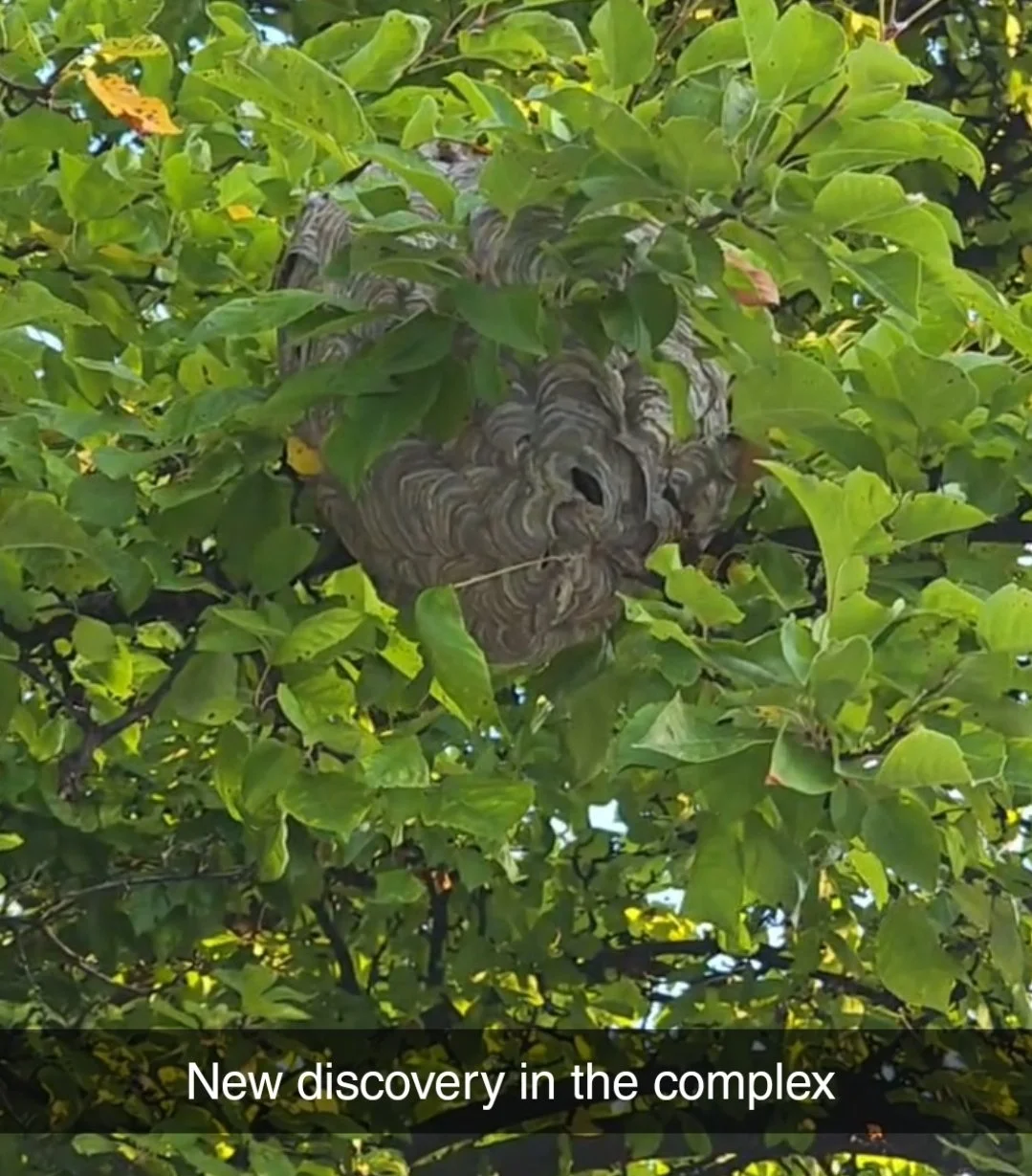
My daughter recently sent me a photo that would make just about anyone stop in their tracks:
A huge papery wasp nest.
You know the kind - gray, football-shaped and hanging from a tree like someone put a papier-mâché piñata in the yard.
So, naturally, I started looking into it.
And then I asked around.
That produced suggestions ranging from:
Leave it alone until winter.
Spray it at night.
Call a professional.
Make homemade traps.
Blast it with a hose.
Knock it down and bag it.
And my personal favorite: one woman's husband supposedly cut off the branch, jumped on his quad, drove away with the nest and threw it into a wood stove.
She wisely finished that story with:
“Would not recommend.”
I agree. 😂
Once I separated the entertaining stories from the horticultural advice, though, I learned something interesting.
First: Those May Be Bald-Faced Hornets
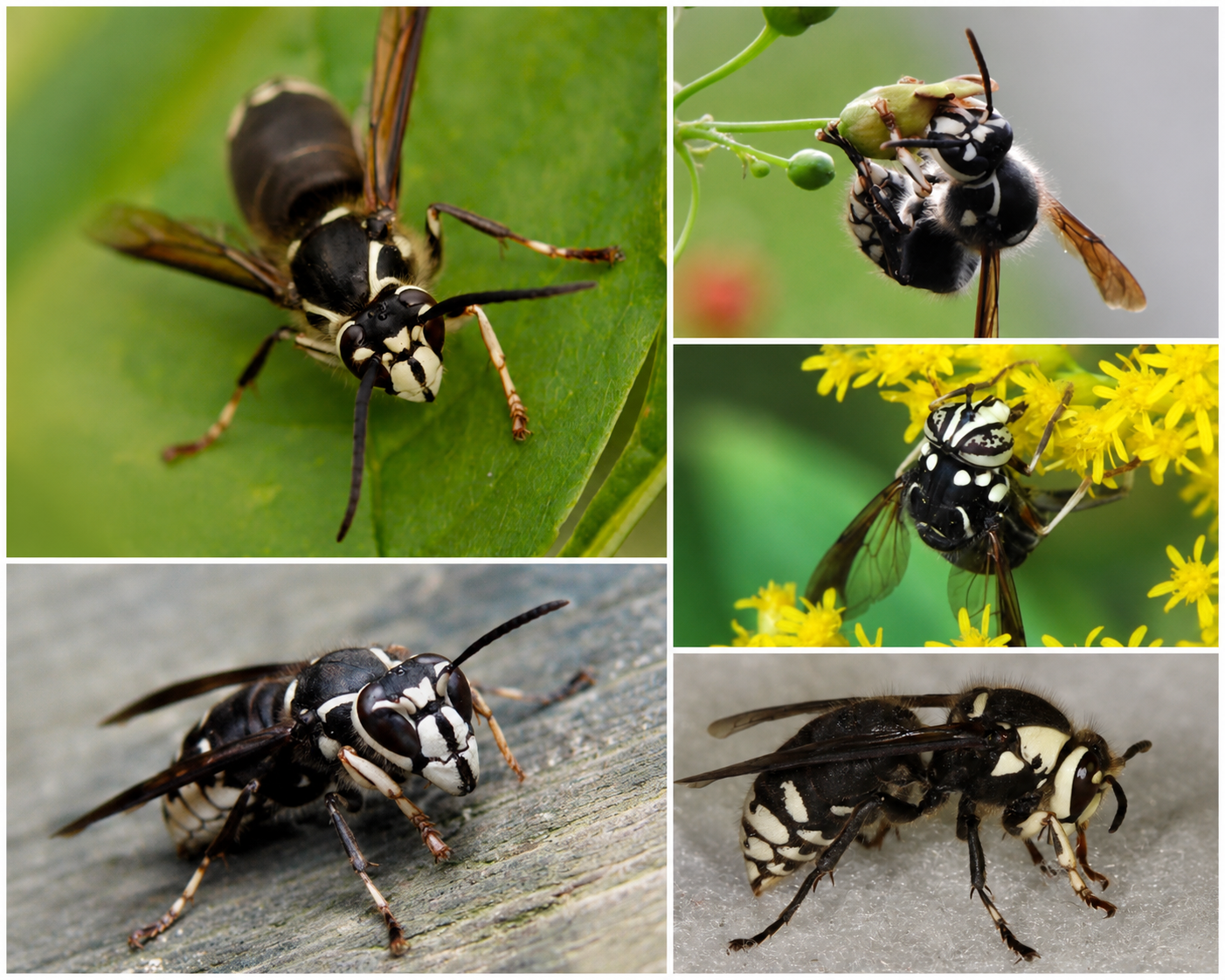
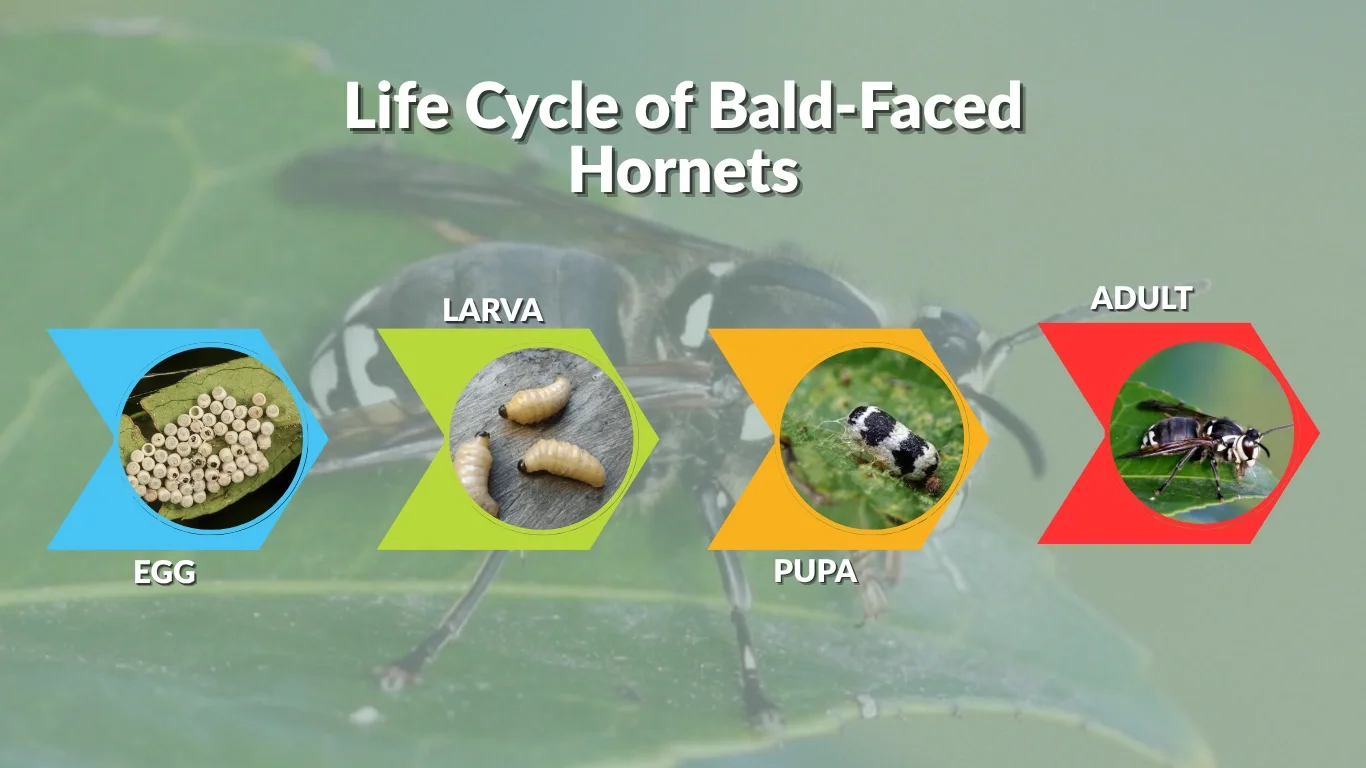
Despite the name, bald-faced hornets (Dolichovespula maculata) aren't actually true hornets. They're a species of aerial yellowjacket.
They build those beautiful - and slightly terrifying - gray paper nests that can become quite large by late summer.
A mature colony can contain hundreds of workers.
And here's the part gardeners may appreciate:
They're beneficial predators.
They capture flies, caterpillars, other yellowjackets and assorted insects to feed their developing young. They also visit flowers and can contribute to pollination.
So discovering one doesn't automatically mean it needs to be destroyed.
Option #1: Do Absolutely Nothing
This was actually one of the most common suggestions I received.
And it may be the best one.
If the nest is somewhere that people, children and pets aren't likely to disturb it, Extension experts generally recommend leaving bald-faced hornet nests alone.
The colony is temporary.
As cold weather arrives, almost the entire colony dies. Newly fertilized queens leave and overwinter elsewhere. The old nest isn't reused the following spring.
That means here in Michigan in late August, we're potentially talking about tolerating the neighbors for a relatively short time rather than declaring war on them.
After the colony dies, you can leave the nest in place to deteriorate naturally or take it down if you'd like to keep the empty nest.
But Location Changes Everything
There's a big difference between a nest 30 feet up a tree at the back of the property and one hanging beside the front door.
I'd be much more concerned if it's near:
a doorway or walkway
a children's play area
a dog run
a frequently used patio
a garden you're working in regularly
an area that has to be mowed
somewhere people might accidentally bump or disturb the nest
Bald-faced hornets defend their colony, and unlike honey bees, they can sting more than once. Vibration from mowing, hammering or other activity close to the nest can also trigger defensive behavior.
And if someone in the household has a known serious allergy to stings, that's an entirely different risk calculation. Extension guidance recommends professional removal when a nest poses that kind of danger.
Option #2: Have a Professional Remove It
After reading everything, this would be my choice if the nest were in a location where we couldn't simply avoid it.
Yes, there are DIY methods.
But there's also something to be said for knowing when “I can probably do this” should become “I can probably pay somebody else to do this.”
Especially when the job involves several hundred flying insects capable of repeatedly stinging you.
If you're uncomfortable with the location or can't safely keep people and animals away, call a licensed pest-management professional and get a quote.
Option #3: Treat the Nest Yourself
This is where some of the Facebook advice was directionally correct, although I wouldn't follow every suggested method.
Extension sources do describe homeowner treatment with a pesticide specifically labeled for wasps and hornets when treatment is necessary. Treatment is generally done at night when the colony is less active and more workers are inside. The product needs to be used exactly according to its label, with appropriate protective measures.
One particularly useful warning I found:
Don't stand there shining a flashlight at an active nest.
Disturbed bald-faced hornets can fly toward a light source.
Personally, a large mature nest isn't where I'd choose to prove my DIY credentials.
Advice I Would NOT Try
This is where crowdsourcing gets entertaining.
I would not:
Blast the nest with a garden hose.
Now you've disturbed a colony while standing within garden-hose distance of it. That doesn't strike me as a particularly favorable arrangement.
Knock the live nest into a bucket or bag.
Again: this requires getting awfully close to a colony you're intentionally upsetting.
Cut off the branch and make a high-speed getaway.
Absolutely hilarious story.
Not going on my garden to-do list.
Assume a homemade trap will make an active nest safe.
A trap might catch individual wasps, but I wouldn't treat that as a substitute for properly dealing with a hazardous nest.
And I'm definitely not recommending the Facebook suggestion involving a shotgun.
There are some gardening experiments I am perfectly happy to let someone else conduct. 😂
Do Bald-Faced Hornets Recognize Your Face?
This was another comment that caught my attention:
“Apparently they also have facial recognition.”
There actually is research showing impressive visual-learning abilities in some social wasps, but that gets oversimplified online into claims that every angry wasp is memorizing human faces and plotting revenge.
That's not a reason I'd use for deciding whether a nest needs removal.
The much simpler concern is enough:
They defend their nest.
Don't disturb it, don't swat at the insects around it, and don't assume that because nobody has been stung yet that deliberately attacking the nest will get the same response.
What We're Going to Do
For my daughter's nest, the first question isn't:
“How do we kill them?”
It's:
“Do we actually need to?”
If the nest can safely remain undisturbed, there's a strong argument for letting nature handle this one. The colony has been living there for months already, and Michigan's cold weather will bring its life cycle to an end soon enough.
If its location makes avoiding it impractical or unsafe, then removal makes sense—and a professional may be worth every penny.
That's actually one of the principles I find myself coming back to over and over in gardening:
Not everything we discover outside is a problem that requires us to do something.
Sometimes the best garden solution really is to leave something alone.
And sometimes the solution is to look at a giant nest full of stinging insects and say:
“Yep. I'm calling a guy.” 😂
Have you ever found one of these?
What did you do—leave it until winter, have it professionally removed, or discover it only after the leaves fell?
I'd love to hear your story.
And please, nobody tell me you put it on a four-wheeler.
Sources and Further Reading
Penn State Extension — Bald-Faced Hornet — Excellent overall reference for identification, nests, biology and management. It confirms that the bald-faced hornet is actually an aerial yellowjacket, not a true hornet.
University of Maryland Extension — Social Wasps: Yellowjackets, Hornets and Paper Wasps — Very comprehensive. Covers identification, nest characteristics, beneficial behavior, repeated stinging, nest defense and management. It also discusses the research behind facial recognition in certain paper wasps, which is useful for correcting that Facebook claim.
University of Illinois Extension — Bald-Faced Hornet: Dangerous Bug or Beneficial Insect? — Especially useful for the section about whether to leave or remove a nest. It explains that colonies die after a hard frost, new queens overwinter elsewhere, and disturbing/bagging an active nest can result in stings.
Ask Extension — Michigan: Bald-Faced Hornets — This one is especially good because the question came from Washtenaw County, Michigan. The Extension response says they're beneficial insect predators, the colony dies after a good freeze, and the old nest won't be reused.
Ask Extension — Michigan: Should an Old Bald-Faced Hornet Nest Be Removed? — Another Michigan-specific source confirming that an abandoned nest won't be reused and will naturally deteriorate over winter.
Ask Extension — Michigan: Identifying and Managing a Bald-Faced Hornet Nest — Also from Washtenaw County. The recommendation is essentially: if you can avoid the area, leave them alone for the rest of the season; if the location makes that impractical, removal may be necessary.