Grow Strawberries as an Edible Ground Cover in Michigan
What if your ground cover could help suppress weeds, fill empty spaces and give you strawberries?
That’s one of the reasons I love growing strawberries.
Most people think of strawberries as something that needs its own dedicated strawberry patch. I don't necessarily grow them that way. I use strawberries as an edible ground cover, allowing the plants to send out runners and gradually fill an area.
And they will fill it!
I have beds where strawberries have grown together into a thick carpet of plants. Instead of looking at those runners as something I automatically need to remove, I use their natural spreading habit to my advantage.
Plus, you get strawberries. 🍓
And if you've been thinking about adding strawberries to your Michigan garden, fall can be a great time to get them established.
1. Start With the Right Strawberry
There are three general types of strawberries you'll commonly encounter: June-bearing, everbearing and day-neutral.
June-bearing strawberries produce their main crop over a relatively short period in late spring or early summer. They're also vigorous runner producers, which makes them especially useful when my goal is to get plants to spread and cover an area.
Everbearing and day-neutral strawberries can produce fruit over a longer portion of the growing season. They generally put more of their energy into producing fruit and may not spread as aggressively.
So think about your goal.
Do you want a large harvest at one time? Do you want berries throughout the season? Or is one of your goals to have the strawberries spread into a living ground cover?
Choose your variety accordingly.
2. Plant Them Correctly — Especially the Crown
Strawberries aren't difficult to plant, but there is one little detail that matters a LOT:
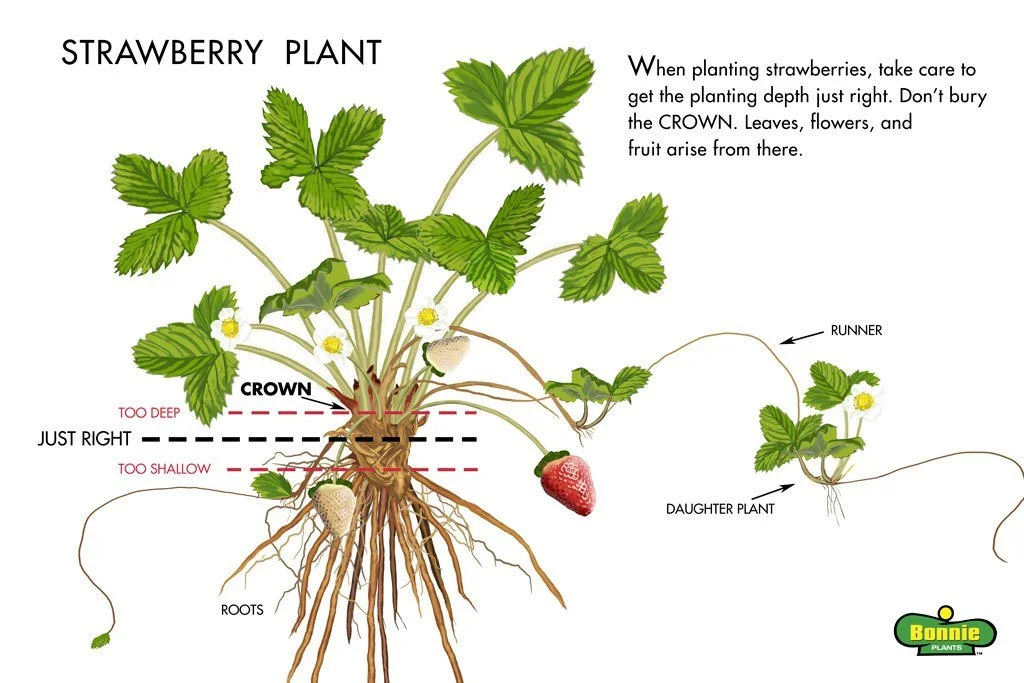
Don't bury the crown.
The crown is the central portion of the plant where the roots meet the leaves. When you plant your strawberry, the roots should be below the soil while the crown remains right around soil level.
Plant it too deeply and the crown can rot. Plant it too high and the roots can dry out.
It doesn't need to be complicated. Just pay attention to where that crown sits when you're planting.
3. Give Them Sun and Soil That Drains
For the best fruit production, strawberries appreciate plenty of sunshine — ideally at least six to eight hours.
They also don't want to sit in soggy soil.
That's one reason they can work beautifully in raised beds and other well-drained garden areas. If you're gardening in heavy Michigan soil, improving drainage can make a significant difference.
Once established, their low-growing habit also makes strawberries useful underneath and around taller plants where conditions are appropriate.
You're no longer thinking only in rows.
You're using the vertical layers of your garden.
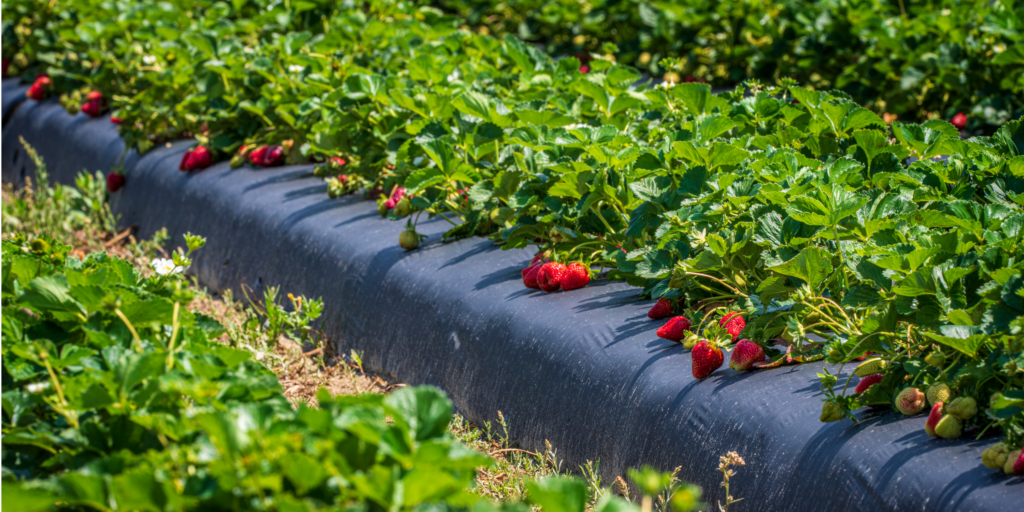
See how strawberry farmers elevate the mounds of soil, leaving a trench space between rows
4. Let Those Runners Become Ground Cover
This is where I sometimes garden differently.
You'll frequently hear advice telling you to remove strawberry runners, especially if your goal is to make an individual plant put more energy into fruit production.
That's valid advice — if maximum production from that individual plant is your goal.
But that's not always my goal.
I sometimes want those runners.
A strawberry plant sends out a runner, the runner produces another plant, that plant roots into the soil, and eventually it can produce runners of its own.
Given the right conditions, one strawberry plant can turn into many.
I've allowed mine to do exactly that, and I have videos showing how thickly they can eventually fill a bed.
Food - That makes strawberries one of my favorite forms of edible ground cover. YUM!
Living Mulch - They cover otherwise bare soil, create a beautiful green layer in the garden, capture rain for the other plants in the beds, prevent erosion, keep the soil shaded and cool and contribute to the life of the other garden plants.
Color - The lush green leaves are one of the first to grow in spring and continue to grow throughout the summer and into fall. Much prettier than bare soil or standard mulch. And did you know the leaves are also edible??
Wildlife - I have so many planted in so many beds AWAY from my food gardens that wildlife helps themselves and I don’t get the pest pressure as berries are being produced.
That's a pretty good return for letting a plant do what it naturally wants to do.
There is a tradeoff: a densely planted strawberry bed may require some management for airflow, disease and overcrowding. You don't have to let every runner stay forever. Cut the runner cords, thin or redirect plants when necessary. Mow around the edges of the beds to keep them manageable.
The goal isn't uncontrolled chaos.
It's controlled laziness.
Let the plant do some of the work for you.
5. Protect Your Plants and Keep Them Watered
Newly planted strawberries need consistent moisture while their roots become established.
That doesn't mean keeping them soggy. Water deeply enough to encourage root development and keep an eye on them during dry stretches — especially when establishing new plants.
Then there are the other strawberry lovers.
Birds.
Chipmunks.
Slugs.
And apparently every other creature that lives within driving distance of your garden.
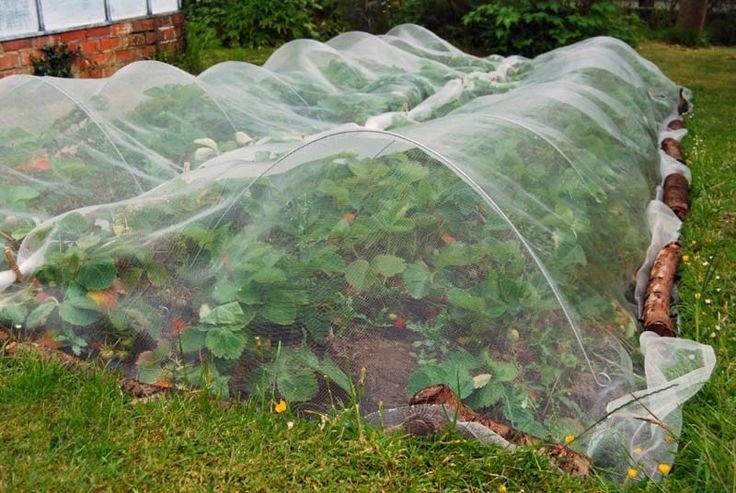
IF they're taking more than their fair share, netting or another physical barrier may be necessary once fruit begins developing. Keep it simple!
In late fall, Michigan strawberries also benefit from winter protection. Once the plants have gone dormant and we've had freezing temperatures, a layer of clean straw can help protect the crowns from repeated freezing and thawing.
Don't bury actively growing plants under a mountain of mulch too early. Wait for dormancy, protect them for winter, and pull the mulch back from the crowns when growth resumes in spring.
Why I Like Planting Strawberries in Fall
Spring isn't your only opportunity to add strawberries to your garden.
Early fall can give plants time to establish roots while temperatures are cooler, rains fall and before the ground freezes. Instead of asking a new plant to establish itself during summer heat, you're giving it a head start for next year's growing season.
The important part is not waiting too long.
Your strawberries need enough time to begin establishing roots before winter arrives. If you're adding them in fall, earlier is better than trying to tuck new plants into freezing soil at the last minute.
And remember: we're gardening in Michigan. The calendar gives us a general idea, but the weather gets the final vote.
Rethink What a Strawberry Patch Has to Look Like
This may be my favorite part.
Your strawberries don't necessarily have to live in a perfectly organized, dedicated strawberry patch.
Think about the unused spaces in your garden.
Could strawberries grow along the edge of a raised bed?
Could they spread underneath taller edible plants?
Could they fill a bed where you'd otherwise have bare soil?
Could they become part of an edible landscape instead of being separated from everything else?
That's how I want people to start thinking about gardening.
Instead of constantly fighting plants that want to spread, sometimes we can ask:
How can I make that habit work for me?
With strawberries, I can let those runners spread, cover the ground and create more plants.
Then I get to walk outside and pick strawberries from my ground cover.
That's my kind of gardening.
Learn. Grow. And let the plants do some of the work.
— The Lazy Northern Gardener
PS: My Strawberry Ground Cover Started With a Client's Overgrown Patch
The strawberries I'm growing as ground cover actually have a story.
I had a client with a huge, thriving strawberry patch. It was producing so well that her grandkids loved going out and picking berries — but there was one problem.
There was nowhere to walk.
The strawberries had filled practically every available space, so whenever the grandkids went berry picking, they inevitably stepped on and crushed some of the plants.
→She hired me in the fall to create pathways through the patch using paver stones so the kids could walk through safely and pick as many strawberries as they wanted.
Of course, there were strawberry plants growing everywhere we needed to put a paver.
I carefully dug out every plant that was in the way and tossed them into a bucket while I worked. By the time we finished, I had hundreds of strawberry plants.
I asked my client what she wanted me to do with them.
"Oh, you can just throw them away."
Throw away perfectly good strawberry plants?
Yeah...that wasn't happening.
I brought them home.
I planted quite a few of them in my own beds, gave a bunch of them away, and those rescued strawberry plants have absolutely thrived. They're the strawberries you now see spreading through my beds as ground cover.
And that original strawberry patch taught me something else: strawberries really can fill a space.
That's wonderful when you want living, edible ground cover. But my client's garden also showed what happens when you don't plan for access.
If you're going to let strawberries spread, think about where you're going to put your feet.
Leave pathways, add stepping stones, or create designated picking areas before the plants completely fill the space.
Then you can let the strawberries do what they do best — spread — without crushing them every time you want to harvest your berries!