Fall Garden Planning: Solve Next Year’s Problems Now
Don’t Just Clean Up Your Garden This Fall—Build Next Year’s Garden
Fall garden cleanup gets a lot of attention.
Pull the dead plants. Rake the leaves. Put away the patio furniture. Clean the tools.
Those things may need to happen, but I've been thinking about fall gardening a little differently.
What if fall isn't just about finishing this year's garden?
What if it's one of the best times to start next year's garden?
That really hit me while I was working at our place in Michigan's Thumb.
I went up there with a volunteer peach tree that needed a new home and five volunteer strawberry plants that I wanted to move into the corten raised beds.
I planted the strawberries, watered them in, weeded the beds and pulled out some things that had come and gone like chamomile and dilll.
The peach tree was another story. Whether I could get that planted depended on just how hard the ground was going to be.
But even if everything didn't get accomplished that day, I was doing something much more important than simply cleaning up.
I was thinking ahead.
If You Want Fruit Someday, You Have to Plant the Tree
Fruit trees are a perfect example of why fall planning matters.
They aren't instant gratification gardening.
Depending on the type of fruit, rootstock and growing conditions, you may wait several years before a young tree produces a substantial crop.
Which can make it very easy to say:
“I'll do that next year.”
And then next year comes.
And then another.
Meanwhile, the tree you didn't plant isn't getting any closer to producing fruit.
Start the clock.
If you know you eventually want an orchard, berry patch or other perennial food-producing plants, start thinking about where they could go now.
You don't have to build the entire orchard in one weekend.
Plant one tree.
Add a few strawberry plants.
Start a raspberry row.
Prepare the site.
Make the plan.
Every perennial food plant you establish is an investment in future harvests. And one type at a time gives you time and space to learn exactly what this plant needs and doesn’t need.
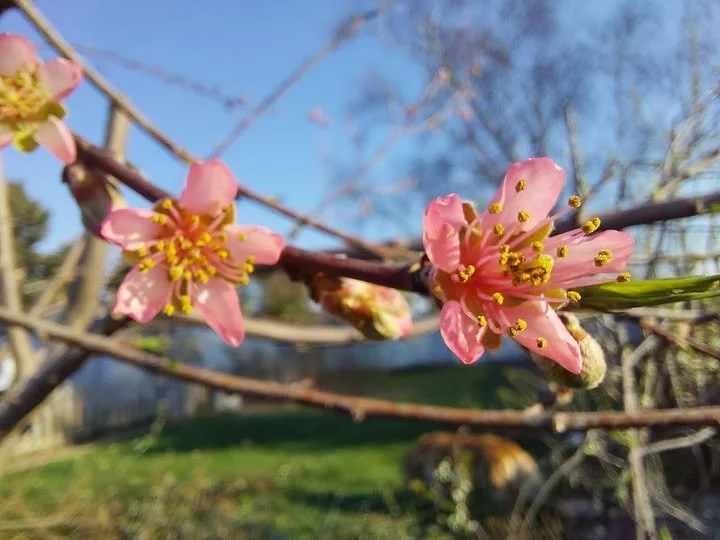
Peach blossoms in spring
Those first blossoms don't appear because you decided you wanted peaches that morning.
They are the result of something that happened much earlier.
Someone planted the tree.
Someone waited.
Someone cared for it.
And eventually...
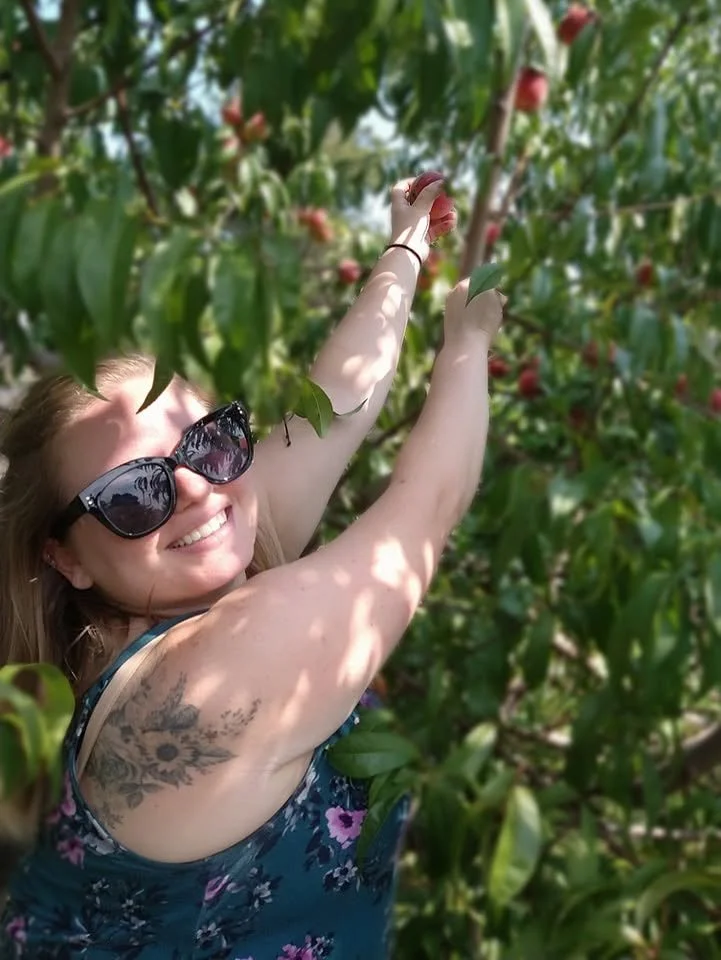
My daughter picking peaches
...someone gets to pick the peaches.
And sometimes you get a LOT of peaches.
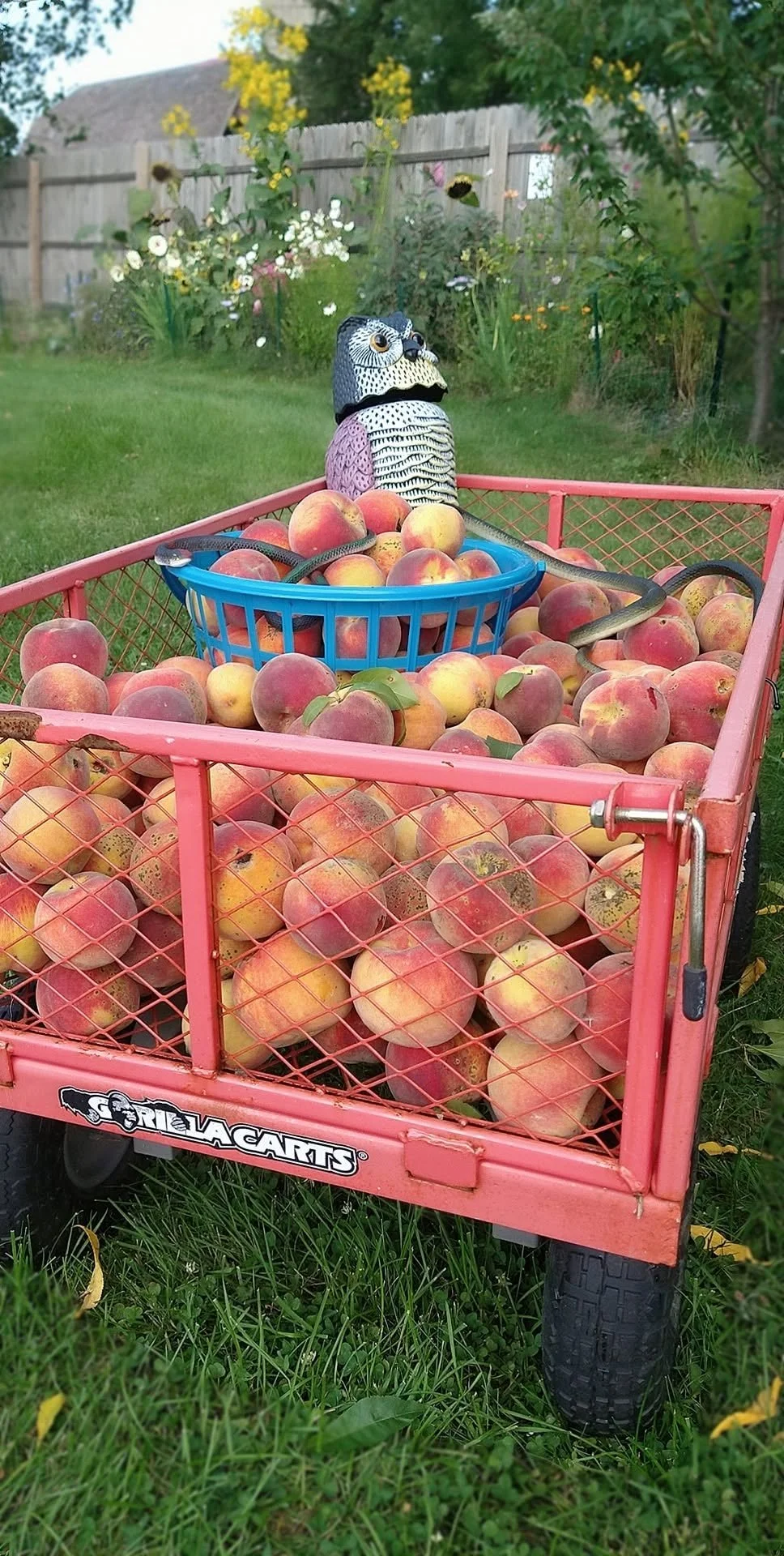
Gorilla cart full of peaches. Pretend owl and rubber snakes keeps birds away a couple weeks before picking.
This is why you plant the fruit tree before you're ready for the fruit.
Fall Is Also the Time to Remember What Went Wrong
There's another advantage to planning now:
You haven't forgotten everything that annoyed you this summer yet. 😂
Think about your garden this year.
What repeatedly caused problems?
Did deer eat your vegetables?
Did rabbits find a hole in the fence?
Did birds get your berries before you did?
Did raccoons discover your sweet corn?
Was your garden too far from a water source?
Did an old fence finally give up?
Did you realize something was planted in completely the wrong place?
Don't cover the garden with leaves, go inside for winter and expect yourself to remember all of this in April.
Write it down now. Take photos to remind you. Add it to the Notes in your phone. Schedule a review time in your phone’s calender.
Better yet, start solving it now.
My Next Project: Protecting the Garden From Wildlife
That's one of the things I'm working on at the Huron Hideaway.
There's plenty of wildlife around - which is one of the things I love about being there.
But there's a difference between enjoying wildlife and providing an all-you-can-eat vegetable buffet. 😂
I'm looking into having a large garden enclosure built that will allow me to grow food while protecting it from deer, raccoons and birds.
That's not a project I want to figure out after I've planted next year's garden.
I want the protection plan in place first.
And that's a lesson I think more gardeners can use.
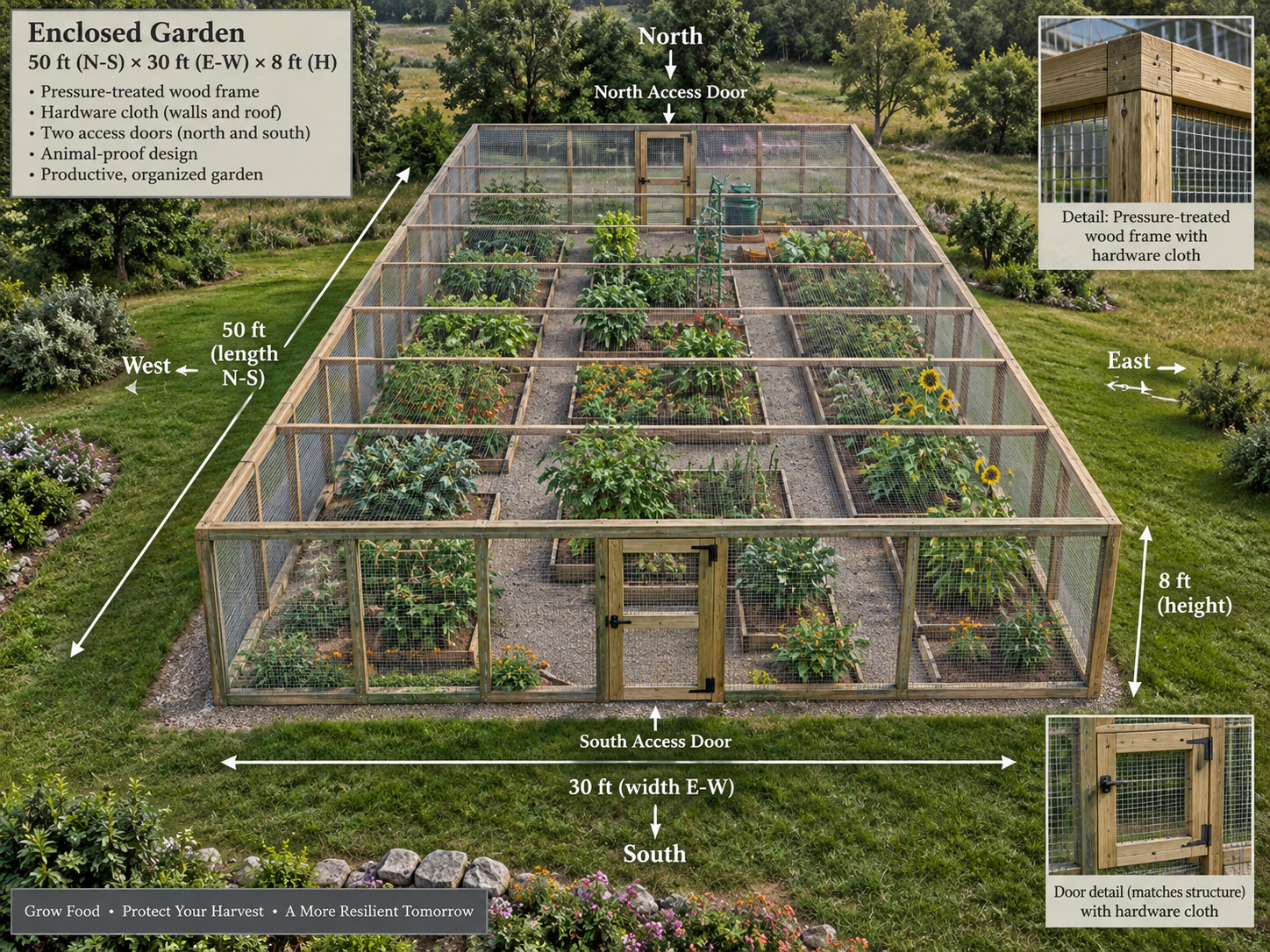
Mock-up of what I want to protect my food garden up north
Protect Before You Plant
We tend to do this backward.
We plant something.
Something eats it.
We plant it again.
Something eats it again.
Then we start researching fences, netting and barriers.
Instead, use fall and winter to think about what you're going to need.
Maybe that means:
repairing an existing fence
increasing the height of a deer barrier
adding hardware cloth where small animals are getting through
planning bird netting or another crop-protection system
building a completely enclosed growing area
changing where you grow particularly vulnerable crops
You don't necessarily need to complete all of those projects this fall.
But you can decide what problem you're trying to solve.
That's a huge head start.
Don't Automatically Repeat This Year's Garden
This may be one of the most valuable things you can do before winter.
Walk through your garden and ask:
What worked?
What didn't?
What frustrated me over and over again?
What took too much time?
What did I wish I had more of?
What did I grow that nobody actually ate?
And maybe most importantly:
What could I change so this is easier next year?
That's the kind of fall cleanup I'm interested in.
Not simply making everything look tidy.
I want to clean up problems, too.
Plan. Plant. Protect.
I didn't set out that day thinking about my Five Ps, but there they were.
I was PLANNING a protected growing space.
I was PLANTING strawberries and hopefully giving a volunteer peach tree a new home.
And I was thinking about how I would PROTECT the food I want to grow from the wildlife that lives around it.
That's exactly why I use the Five Ps.
They give us a way to stop looking at the entire garden as one enormous project and ask:
What does my garden need from me right now?
Fall doesn't have to mean you're done.
Sometimes fall is when you make the decisions that completely change next year's garden.
Don't Let Winter Make You Forget
This is the part I really want you to remember.
Winter comes faster than we think.
Then the holidays happen.
Then the seed catalogs start arriving.
And suddenly we're planning another garden without remembering half of the things we swore we would change.
Don't let that happen.
Take pictures.
Make notes.
Measure the space where you need a fence.
Research the fruit tree.
Move the strawberries.
Fix what's broken.
Get a quote on the project.
You don't have to accomplish everything before the snow flies.
You just don't want to lose what this year's garden taught you.
Need Help Figuring Out What Comes Next?
If you're standing in your garden thinking, I know this isn't working, but I don't know what I should do instead, you don't have to spend the winter figuring it out alone.
This is a great time for a garden consultation or ongoing garden mentoring because we can look at what happened this season while it's still fresh—and create a plan for what comes next.
On Site Consultation — The Lazy Northern Gardener
And remember:
The best time to solve next year's garden problems isn't next year.
It might be right now.
Learn. Grow.
Tammy
The Lazy Northern Gardener
P.S. Come Experience Michigan's Thumb
A lot of this planning and planting is happening at The Huron Hideaway, our place between Caseville and Port Austin.
The cabin is available for all-season rentals, with trails, a firepit, a fenced dog area and beaches nearby. Listing page here: The Huron Hideaway - Firepit, Trails, Fenced Dog Area & Beaches
Facebook page here: (4) Facebook