Learn which beneficial insects eat flea beetles, what to plant to attract them, and how to make your garden naturally more resistant to pests.
Have you ever walked out to your garden and discovered tiny holes all over your eggplant, potato, radish, or kale leaves?
You might be dealing with flea beetles. These little jumping insects can do a surprising amount of damage, especially to young plants. And if you've battled them year after year, you've probably wondered how to keep them from coming back.
But here's a question I find even more interesting:
What eats flea beetles in nature?
After all, flea beetles have been around a lot longer than our vegetable gardens. Surely something is eating them!
I started researching their natural enemies while looking into a gardener's recurring flea beetle problem in Tennessee. Since I garden with chickens, I was especially curious about whether birds could help. Click here for that post: Flea Beetles on Eggplant in Tennessee: Can Chickens Help? What I discovered is that there are already some impressive pest hunters living in our gardens. We just need to encourage them to stick around.And that's s omething we can often do with a few carefully chosen plants.
Need help figuring out a natural pest-management plan for your garden? I offer virtual garden consultations anywhere in the U.S. Let's work together.
What Eats Flea Beetles Naturally?
Flea beetles have several natural enemies, including predatory insects, parasitic wasps, and organisms that attack them while they're living underground. Some attack adult beetles. Others attack their larvae. Here are some of the natural enemies worth knowing about.
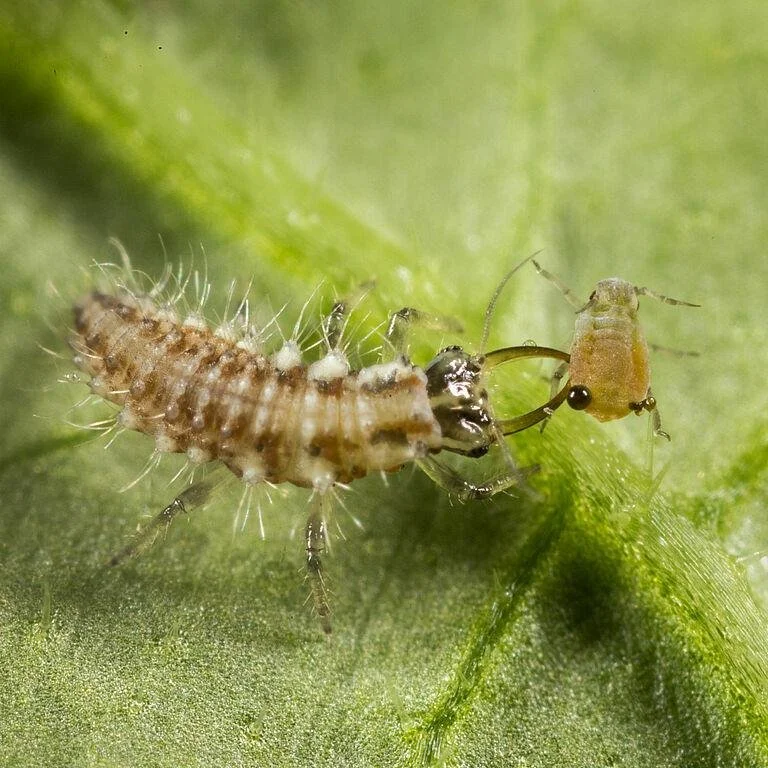
1. Green Lacewing Larvae: Tiny Garden Hunters
You may recognize adult green lacewings by their delicate, transparent wings and bright green bodies.
But it's their larvae that do most of the hunting. Sometimes called aphid lions, lacewing larvae use their curved jaws to grab small insects and other prey. They're best known for feeding on aphids, but they've also been observed feeding on flea beetles. Adult lacewings of some species feed on nectar, pollen, and honeydew, so flowering plants can help support their populations.
How to encourage them: Grow flowering dill, cilantro, and other nectar-producing plants, and avoid unnecessary broad-spectrum insecticide applications.
2. Big-Eyed Bugs: Small but Mighty
Big-eyed bugs are tiny predatory insects with noticeably large eyes. They're easy to overlook because they're so small, but they feed on a variety of garden pests, including flea beetles, insect eggs, mites, and other soft-bodied insects. They often hunt among plant foliage and low-growing vegetation.
How to encourage them: Maintain a diversity of plants in and around the vegetable garden, including flowering herbs and some low-growing ground cover.
3. Damsel Bugs: The Garden's Stealth Hunters
Damsel bugs are slender, brownish or grayish insects that hunt other insects. They use piercing mouthparts to capture their prey and have been observed feeding on adult flea beetles. They're generalist predators, meaning they don't specialize in eating just one kind of pest.
How to encourage them: Provide flowering plants and undisturbed vegetation near the garden where they can shelter and hunt.
4. Ground Beetles: Pest Control at Soil Level
This group is particularly interesting because flea beetles spend part of their life cycle underground. Many ground beetles are nighttime hunters, searching through soil, mulch, and plant debris for insects and other small creatures. Some predatory ground beetles feed on flea beetle larvae or adults. That means a healthy population of ground beetles could help reduce pest pressure near the soil surface.
How to encourage them: Maintain some mulched paths, low-growing vegetation, and undisturbed habitat near your growing areas. You don't need to leave every part of the garden messy. Just recognize that beneficial insects need places to live, too.
5. Parasitic Wasps: A Surprising Natural Enemy
Here's one I found fascinating!
A tiny parasitic wasp called Microctonus vittatae attacks flea beetles. The female wasp lays an egg inside an adult flea beetle. The developing wasp larva lives inside its host, eventually killing it. It can also interfere with the reproduction of female flea beetles. These little wasps are naturally occurring, but research suggests their impact on large flea beetle populations is often limited. They're not a practical stand-alone solution to an infestation.
Still, they're a reminder that not every wasp in the garden is a problem!
Some tiny parasitic wasps depend on nectar from flowers as adults, making flowering herbs and other small-flowered plants useful additions to a beneficial-insect garden.
6. Beneficial Nematodes: Pest Hunters Underground
Not every natural enemy of flea beetles is visible. Certain beneficial nematodes, including species in the Steinernema and Heterorhabditis groups, can attack flea beetle larvae in the soil. These are microscopic organisms, not insects. They enter susceptible insect hosts and release associated bacteria that kill them.
Beneficial nematodes are sometimes sold as biological pest-control products, but results depend on the species used, soil temperature, moisture, timing, and whether the target insect is susceptible.
They're worth knowing about, but I wouldn't assume applying them will solve a recurring flea beetle problem.
What Plants Attract Flea Beetle Predators?
Now for the part I really love.
We can encourage beneficial insects by growing plants that provide nectar, pollen, shelter, and suitable places for them to reproduce. The trick is to think about what those insects need throughout their lives, not just what they eat. Here are some of my favorite plants to consider.
Dill: Let Some of It Flower!
Dill is one of the easiest plants to incorporate into a vegetable garden. When allowed to flower, it produces beautiful yellow, umbrella-shaped flower clusters. Those tiny flowers are accessible to a variety of beneficial insects, including small wasps and predatory flies. Instead of harvesting every dill plant, let a few go to flower.
Dill is an annual, and in hot climates like Tennessee, it can bolt quickly. That's actually useful when you're growing it for beneficial insects! Try sowing a few plants at different times to extend the flowering period and let it reseed the next year. (Look for butter eggs and caterpillars to raise too!)
Sweet Alyssum: Small Flowers, Big Benefits
Sweet alyssum produces masses of tiny white, pink, or purple flowers. It's a wonderful low-growing plant for garden borders and the edges of raised beds.
Its flowers can attract hoverflies, tiny parasitoid wasps, and other beneficial insects. Hoverfly larvae are especially useful aphid predators, although they aren't established as major flea beetle predators. It’s also an excellent ground cover - shading and cooling the soil and capturing and keeping water - avoiding runoff.
That's an important distinction. We're building a healthier garden ecosystem, not claiming every insect attracted to these flowers eats flea beetles. Sweet alyssum often performs especially well during cooler weather, so in hotter regions, spring and fall may be its best seasons.
Mountain Mint: A Beneficial-Insect Magnet
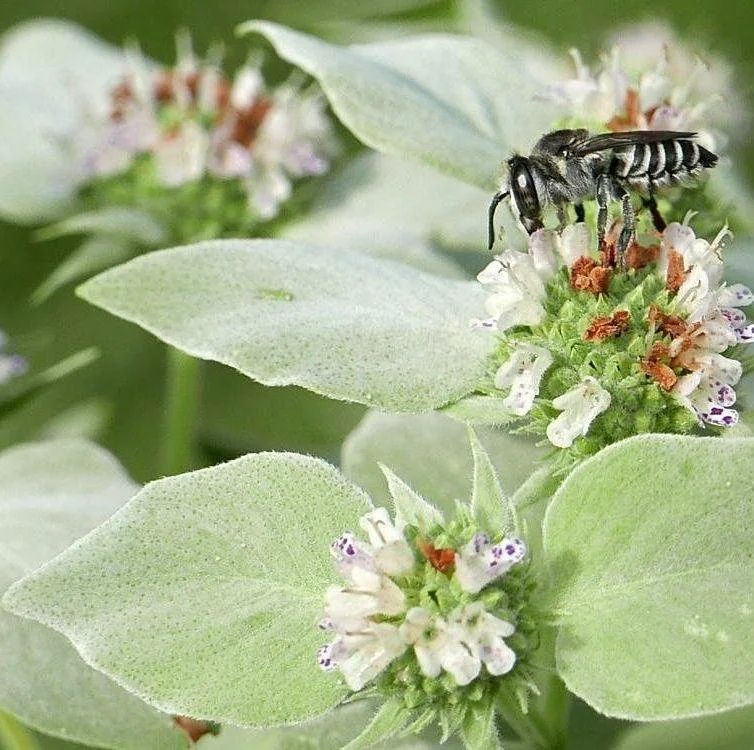
If you're interested in establishing a permanent beneficial-insect garden, I would seriously consider mountain mint. Native mountain mints (Pycnanthemum species) attract an impressive diversity of pollinators and other insects, including bees, flies, beetles, and wasps. University of Tennessee Gardens has highlighted mountain mint as an excellent native perennial for supporting pollinators.
One species, clustered mountain mint (Pycnanthemum muticum), has silvery-looking foliage surrounding its flowers and can be especially attractive during the summer. It spreads over time, so I'd give it a designated space outside the vegetable beds rather than planting it directly between my eggplants.
Mountain mint doesn't specifically eliminate flea beetles. Its value comes from supporting a broader community of beneficial insects.
Cilantro: Don't Pull It When It Bolts!
If you've grown cilantro, you know how quickly it can decide it's finished producing nice leafy growth. Especially when temperatures rise! But instead of pulling every bolting cilantro plant, consider leaving a few to flower. Those delicate white flowers can provide nectar for small beneficial insects.
It's an inexpensive way to turn an herb that's past its prime into something useful for the garden.
Chamomile and Marigolds
Both chamomile and marigolds can provide additional floral resources for beneficial insects. Marigolds are frequently advertised as pest-repelling plants, but their ability to reliably repel flea beetles hasn't been firmly established. I'd grow them for their flowers and their contribution to garden diversity rather than expecting their scent to keep beetles away. Signet marigold petals have a bright citrusy flavor and are yummy in a tossed salad.
Clover: Habitat Below the Flowers
Clover is another interesting option. Low-growing clover can provide living ground cover, flowers, and habitat for ground-dwelling beneficial insects. However, I wouldn't let clover take over a vegetable bed where young plants need water and nutrients. Instead, consider using it in designated paths or nearby areas where it won't compete with your vegetables.
Do Any Plants Actually Repel Flea Beetles?
This is where things get a little tricky. You'll find plenty of articles claiming that basil, marigolds, garlic, onions, catnip, rosemary, or other strongly scented plants repel flea beetles. But there's a difference between a plant having a strong smell and that plant providing reliable pest control. Research on companion planting suggests that mixed plantings can sometimes interfere with a pest's ability to find its preferred host.
For example, bunching onions, dill, and marigolds have been used in companion-planting strategies for flea beetles.
But I wouldn't count on any of them to protect young eggplants by themselves.
My recommendation is to plant companions for biodiversity and possible pest deterrence, but use physical protection when a crop is particularly vulnerable.
That brings us to another fascinating strategy.
Can Trap Crops Lure Flea Beetles Away?
Instead of trying to repel flea beetles, what if we planted something they liked even better? That's the idea behind a trap crop. A trap crop is a plant intentionally grown to attract pests away from the crop you're trying to protect.
Researchers and growers have experimented with several plants for this purpose, including:
Chinese Southern Giant mustard
Radishes
Daikon radishes
Pak choi
Pacific Gold mustard
But there's an important detail!
Not all flea beetles prefer the same plants. Some flea beetle species specialize in cabbage-family plants such as mustard, radishes, kale, and broccoli. Others prefer nightshade-family plants such as eggplants, potatoes, and tomatoes. That means a mustard trap crop that attracts flea beetles away from broccoli might not be particularly useful against the species attacking eggplants. Before planting trap crops, it's important to identify which type of flea beetle you're dealing with.
And remember, a trap crop only works if you manage the beetles it attracts. Otherwise, you may simply be providing another place for them to feed and reproduce! For the average home gardener, I'd start with insect netting and beneficial-insect habitat before experimenting with trap crops.
What About Chickens and Other Birds?
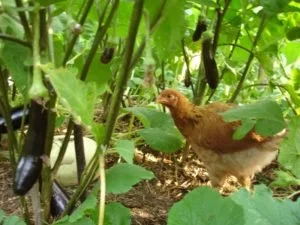
This is where my own gardening experience got me thinking. I keep chickens, and I've watched how enthusiastically they scratch through soil and garden debris looking for something to eat. Since flea beetles spend some of their life cycle underground, I wondered whether chickens could help disturb their larvae, pupae, or overwintering adults.
It's an interesting possibility. Chickens eat many insects, and their scratching could expose some insects hiding in soil and debris. But there's not enough research to say that chickens reliably control flea beetles in vegetable gardens. And they can cause problems of their own!
Chickens may damage roots, scratch up seedlings, eat desirable insects, and contaminate edible crops with droppings. That's why I prefer allowing chickens to work cleared garden areas after harvest rather than putting them among actively producing vegetables. I would also leave permanent beneficial-insect areas undisturbed so ground beetles and other predators have somewhere to live. The goal is to balance the chickens' natural foraging behavior with the insects we're trying to encourage.
How I'd Build a Flea Beetle-Friendly Predator Garden
If I were designing a garden specifically to encourage natural enemies of flea beetles, I wouldn't make it complicated.
I'd start with just a few additions.
Step 1: Protect the vegetables first.
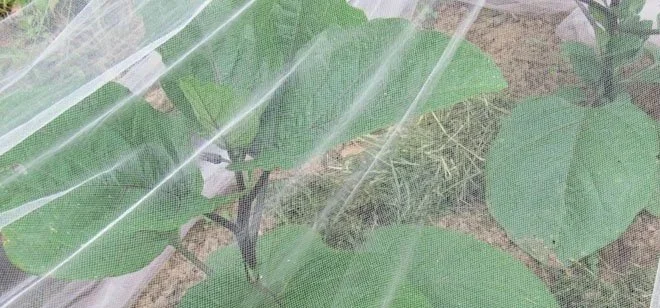
Cover young eggplants and other vulnerable crops with fine insect netting supported on hoops.
Make sure flea beetles aren't already present underneath, and secure the edges.
This provides immediate protection while the plants establish.
Step 2: Add a flowering border.
Plant dill, sweet alyssum, and a few other easy annual flowers near the growing area.
Let some herbs flower instead of harvesting or removing every plant.
Step 3: Establish a permanent beneficial-insect area.
Add mountain mint or other regionally appropriate native flowers outside the vegetable beds.
Choose several species with different bloom periods so beneficial insects have food over a longer season.
Step 4: Protect some ground-level habitat.
Maintain selected mulched paths or planted borders for ground beetles and other predators.
You don't need to disturb every inch of soil or remove every fallen leaf.
Step 5: Avoid unnecessary insecticide applications.
Broad-spectrum insecticides can kill beneficial predators as well as pests.
Even organic insecticides aren't automatically harmless to beneficial insects.
Identify the pest, monitor the damage, and treat only when necessary with products labeled for the crop.
Step 6: Keep observing!
Pay attention to which flowers attract insects and whether your vegetable plants are sustaining less damage.
Take photos and compare what happens from one growing season to the next.
That's one of my favorite parts of gardening. There's always something new to learn!
Will Beneficial Insects Completely Eliminate Flea Beetles?
Probably not. And that's okay. Flea beetles can arrive from surrounding fields, weeds, and nearby gardens. Their populations may build faster than natural predators can control them. Even a garden full of lacewings, predatory bugs, ground beetles, and parasitic wasps can experience flea beetle damage.
But that's not a reason to ignore natural predators. A more diverse garden may support better long-term biological pest control, along with other benefits such as pollination and improved habitat. It's also important to remember that mature plants can often tolerate much more flea beetle feeding than young seedlings.
A few holes in a leaf aren't necessarily a disaster.
The Lazy Gardener's Takeaway
I love finding ways to let nature do more of the work in my garden.
Not every insect needs to be eliminated, and not every damaged leaf needs to be treated. Sometimes the most useful thing we can do is create an environment where beneficial insects can thrive. For flea beetles, that means understanding their natural enemies, planting flowers that support those predators, protecting young crops when necessary, and maintaining a little habitat for the creatures already helping us.
If I were starting small, I'd begin with dill, sweet alyssum, and mountain mint, along with fine insect netting over vulnerable young plants.
Simple additions. Multiple benefits. Less dependence on spraying. And a garden that's doing a little more of the work for us. That's my kind of lazy gardening!
Have you noticed beneficial insects hunting pests in your garden? Or have you tried growing companion plants to reduce flea beetle damage?
I'd love to hear what you've observed!
Happy gardening!
The Lazy Northern Gardener