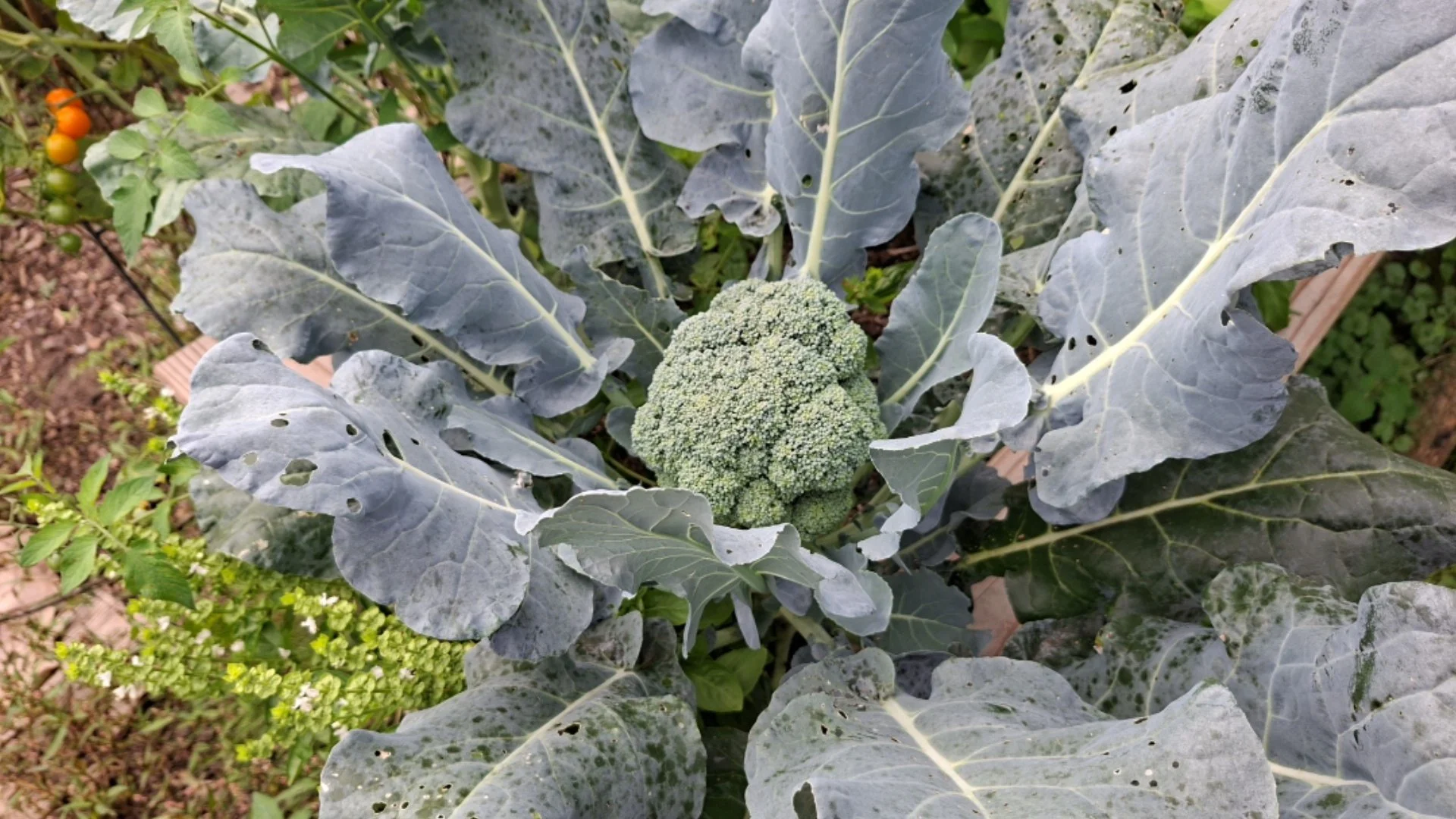
Don't Waste That Broccoli!
How I Use Almost the Entire Plant
There is something incredibly satisfying about harvesting food you've grown yourself - especially when it's your FIRST successful year growing broccoli!
There is something even more satisfying about using almost every bit of it. 😂
I recently harvested two perfect heads of broccoli from my garden. Instead of pulling the plants out of the raised bed and tossing everything into the compost pile, I found a use for nearly every part of them.
The broccoli heads are being dehydrated for future meals. The stems are being saved for soups and other recipes. The leaves went to my chickens and ducks. And the roots?
I left those right where they were growing.
Because being a Lazy Northern Gardener isn't about avoiding work.
It's about making what I already have work harder for me.
Harvesting My Broccoli
When I harvested these two broccoli plants, I cut them off at ground level rather than pulling the entire plants from the soil.
The heads came inside along with their long stems.
The leaves, however, had quite a few holes from insects. Broccoli and other brassicas are notorious for attracting cabbage worms and other hungry garden visitors, and I wasn't interested in spending my afternoon inspecting every leaf for tiny passengers.
Fortunately, I have another very willing cleanup crew.
The flock got the leaves. 🐔🦆
Broccoli leaves are actually edible for people, too. They can be treated much like kale or collard greens. You can sauté them, steam them, put them into soups and stir-fries, or even dehydrate them.
But when mine are heavily chewed and I'm already harvesting plenty of broccoli for the kitchen, I'm perfectly happy to let the birds have them.
Nothing wasted.
Getting the Critters Out of Homegrown Broccoli
If you've ever grown broccoli organically, you probably know the experience:
You harvest a beautiful head of broccoli and then realize something may already be living in your dinner. 😂
Before processing mine, I soak the freshly harvested broccoli in water to encourage any hidden insects to come out, then rinse it thoroughly.
You don't need to soak broccoli for hours or use an extremely strong solution. The goal is simply to dislodge the little critters hiding among all those tightly packed florets.
And because I'm going to dehydrate this broccoli, it gets another important step before it ever reaches my dehydrator.
Should You Blanch Broccoli Before Dehydrating It?
Yes.
Broccoli should be blanched before dehydrating. Blanching helps slow the enzyme activity that can affect the vegetable's flavor, color and quality during storage.
I blanch my broccoli in boiling water for about 3 minutes and then immediately transfer it to ice water to stop the cooking process.
Afterward, I drain it very well and blot away as much excess moisture as possible before putting it into the dehydrator.
Then I dehydrate it at approximately 125°F until completely dry and brittle(usually overnight).
The exact drying time can vary depending on the dehydrator, humidity and — especially — the size of the broccoli pieces. That's why I don't rely solely on the clock.
My Simple Trick for Dehydrating Broccoli Evenly
I sort my broccoli by size before putting it into the dehydrator.
Instead of putting tiny florets and giant florets together on the same tray, I put similarly sized pieces together:
Small florets on one tray. Medium florets on another. Large pieces on another.
That way, when the smaller pieces are completely dry, I can simply remove that tray and allow the larger pieces to continue dehydrating.
There's no reason to keep cooking the little pieces while waiting for the big ones to catch up.
It's a tiny bit of organization at the beginning that makes the rest of the job easier.
Work smarter, not harder.
That's my kind of gardening. 😉
Don't Throw Away Those Broccoli Stems!
This harvest reminded me of something else gardeners sometimes overlook.
Broccoli stems are food! Not the main trunk coming out of the ground though. I mean the stems that hold the branches that lead to the florets.
The large stalk underneath the broccoli head can look tough and unappetizing, and they say underneath that fibrous outer layer is a mild, tender vegetable. That wasn’t my experience.
I tried to peel away the tougher exterior to cut the inside of the stalk into smaller pieces but that outer skin was impenetrable. So instead of ending up in the ER with a knife injury? Pup can have it!
And one of the things I'm particularly interested in using stempieces for is broccoli-cheese soup.
They're perfect for it.
Because the soup ultimately becomes soft and creamy anyway, diced broccoli stems can cook right along with the other vegetables. If I'm using dehydrated stem pieces later, I can simply give them enough time in the liquid to rehydrate and soften before finishing the soup.
Broccoli stems can also be used in stir-fries, casseroles, soups, slaws and vegetable stock. Tender stems can even be eaten raw.
So I'll be dehydrating mine right along with the florets.
And just like the florets, I'll put similarly sized stem pieces together so I can remove them when they're completely dry.
The Chickens Get the Broccoli Leaves
Could I have eaten the leaves?
Absolutely.
Did I want to inspect a bunch of insect-chewed broccoli leaves when I had chickens and ducks standing around perfectly willing to take care of them for me?
Absolutely not. 😂
The leaves became flock food instead of garden waste.
That's one of the things I love about having animals alongside a garden. Food that isn't necessarily something I want for the kitchen can sometimes become food for them.
And in return, well... let's just say the flock eventually contributes plenty back to the composting system too. 😉
And I Left the Broccoli Roots in the Garden
This might be my favorite part.
When I harvested the broccoli, I didn't pull the plants out by the roots.
I cut them at soil level.
As long as the plants are healthy and I'm not dealing with a root or soil-borne disease, I don't necessarily need to yank that entire root system out of my raised bed.
Instead, those roots can stay underground until I'm ready to flip the bed for another crop.
Soil organisms will gradually break that organic material down. Nutrients contained in the roots can eventually cycle back through the soil, and the decomposing root system leaves channels and organic matter behind.
And I didn't disturb the whole bed just to remove something that nature is perfectly capable of breaking down for me.
That's an important distinction, though:
Healthy roots can stay. Diseased roots should go.
If I suspected something such as clubroot or another significant root disease, I wouldn't deliberately leave infected plant material in the bed.
One Broccoli Plant – Very Little Waste
When you look at the entire harvest, those broccoli plants did quite a bit:
🥦 Heads → dehydrated for future meals
🥦 Stems → peeled, chopped and saved for soup and other recipes
🌿 Leaves → food for the flock
🌱 Healthy roots → left in the garden to decompose
That's about as close to using the whole plant as I can reasonably get.
And there's a bigger gardening lesson here.
We spend a lot of time thinking about what our gardens produce, but sometimes we overlook how much value remains after we've harvested the part we're accustomed to eating.
Before you throw something away, ask:
Can I eat it?
Can I preserve it?
Can my animals eat it?
Can I compost it?
Can I leave it for the soil?
Not everything needs to leave the garden in a trash bag.
Sometimes the laziest solution is also the most useful one.
And around here, I consider that a win. 🌱
Want Help Getting More From Your Garden?
Gardening becomes a whole lot easier when you understand not only how to grow something, but also when to harvest it, how to preserve it and what to do with the garden afterward.
That's the kind of practical gardening I teach.
If you'd like personalized help with your garden, I offer garden consultations, designs and planting plans, plant shopping, installations and one-on-one garden mentoring.
Visit thelazynortherngardener.com to learn more.
I Grow Gardeners. 🌱
Learn. Grow. And garden a little lazier.
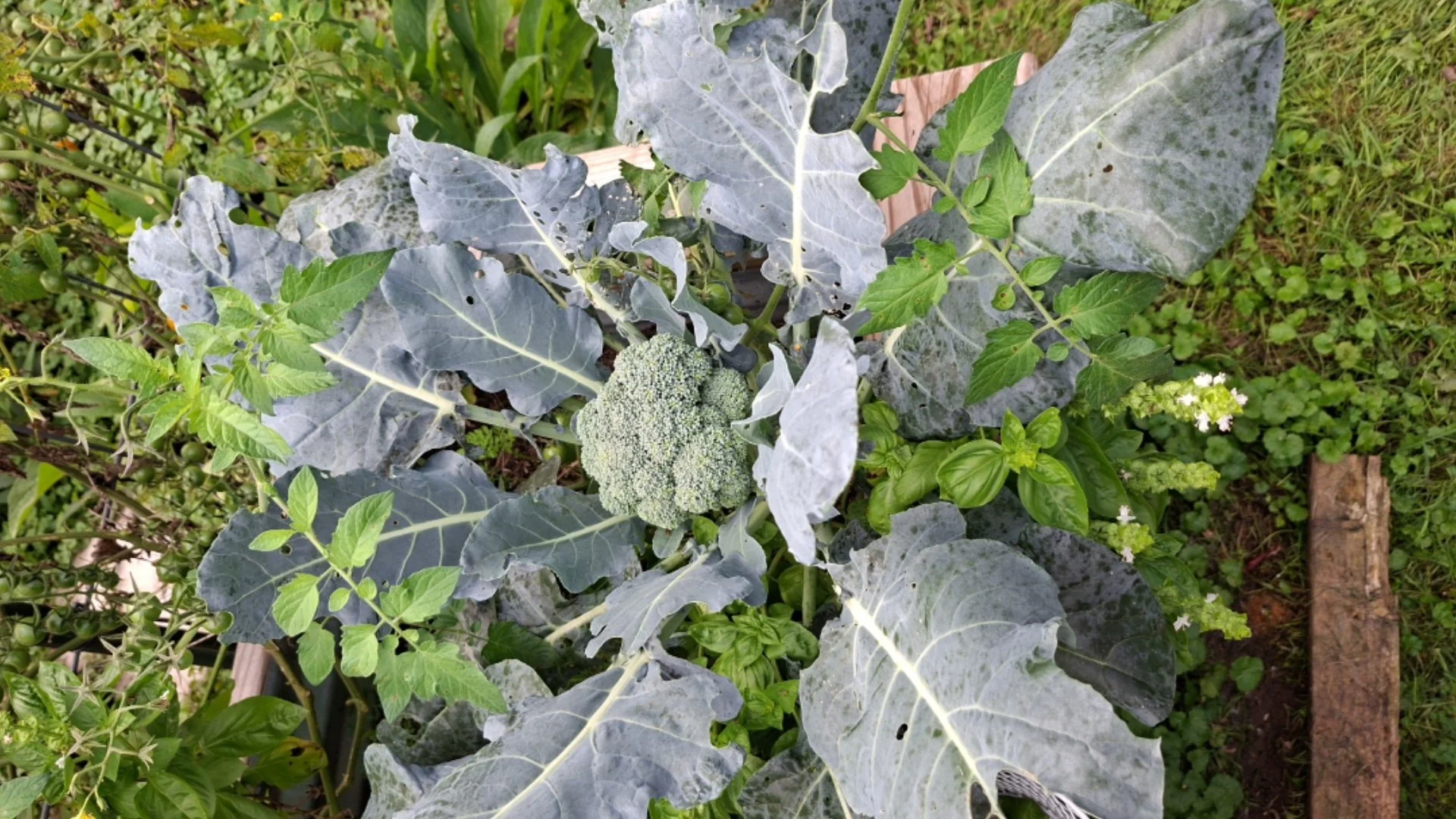
I like to mingle my plantings. You see growing happily with basil and tomato.